Your resume is often the first impression you make on a recruiter, and the skills section plays a major role in determining whether you get shortlisted. Choosing the right skills for resume can demonstrate your qualifications, highlight your strengths, and show employers that you’re the right fit for the role. A well-crafted resume doesn’t simply list random abilities—it showcases relevant skills that match the job description and support your professional experience.
Today’s employers look for a combination of technical expertise and interpersonal abilities. Whether you’re applying for an entry-level position, changing careers, or pursuing a senior management role, selecting the right skills for resume can significantly improve your chances of landing an interview.
In this comprehensive guide, you’ll learn what skills for resume employers value most, the difference between hard and soft skills, how to choose the right ones for different industries, common mistakes to avoid, and examples you can use to strengthen your resume in 2026.
Table of Contents
- What Are Skills for Resume?
- Why Resume Skills Matter
- Hard Skills vs Soft Skills
- Top Hard Skills Employers Want
- Top Soft Skills Employers Value
- Industry-Specific Resume Skills
- How to Choose the Right Skills
- Common Resume Skill Mistakes
- Hard Skills vs Soft Skills Comparison
- Pros and Cons
- Conclusion
- FAQs
What Are Skills for Resume?
Skills for resume are the abilities, knowledge, and competencies that demonstrate your capability to perform a job effectively. These skills help employers quickly understand your qualifications and determine whether you’re a suitable candidate for a position.
Resume skills generally fall into two main categories:
- Hard skills
- Soft skills
Hard skills are measurable abilities learned through education, training, or work experience. Soft skills relate to how you communicate, collaborate, and solve problems in the workplace.
Including a balanced mix of both types creates a stronger and more competitive resume.
Why Resume Skills Matter
Recruiters often spend only a few seconds reviewing each resume. A well-written skills section helps them quickly identify whether your qualifications match the position.
Adding relevant skills for resume can help you:
- Pass Applicant Tracking Systems (ATS)
- Increase interview opportunities
- Demonstrate professional expertise
- Highlight your strengths
- Stand out from other applicants
- Show industry-specific knowledge
- Support your work experience
- Improve overall resume quality
Choosing skills that directly match the job description is one of the most effective ways to improve your resume.
Hard Skills vs Soft Skills
Understanding the difference between hard and soft skills helps you build a more balanced resume.
Hard Skills
Hard skills are technical abilities that can be learned, measured, and tested.
Examples include:
- Microsoft Excel
- Python programming
- Data analysis
- Graphic design
- SQL
- AutoCAD
- Project management
- Video editing
- Search Engine Optimization (SEO)
- Digital marketing
These skills often require formal education, certifications, or hands-on experience.
Soft Skills
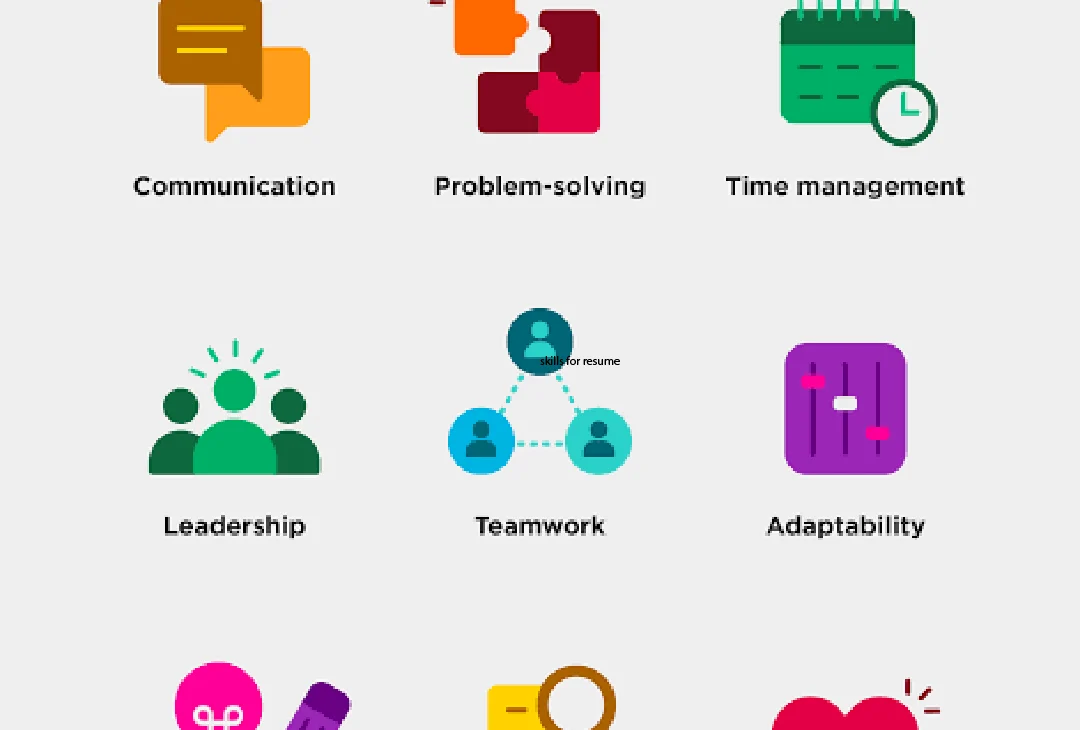
Soft skills describe how you work with others and handle workplace situations.
Examples include:
- Communication
- Leadership
- Teamwork
- Time management
- Problem-solving
- Adaptability
- Critical thinking
- Creativity
- Organization
- Emotional intelligence
Strong soft skills complement technical expertise and are valuable across nearly every profession.
Top Hard Skills Employers Want
The most valuable technical skills vary by industry, but several remain consistently in demand across multiple sectors.
Popular hard skills for resume include:
- Microsoft Office
- Excel
- Data visualization
- SQL
- Python
- JavaScript
- Cloud computing
- Cybersecurity
- UI/UX design
- Accounting
- Financial analysis
- CRM software
- Adobe Photoshop
- Adobe Illustrator
- Video editing
- Artificial Intelligence (AI)
- Machine learning
- Search engine optimization
- Content writing
- Google Analytics
Including only the skills relevant to your target role makes your resume more effective than listing every ability you possess.
Top Soft Skills Employers Value
While technical expertise gets your foot in the door, soft skills often determine long-term success in the workplace.
Highly valued soft skills for resume include:
- Verbal communication
- Written communication
- Leadership
- Team collaboration
- Customer service
- Decision-making
- Conflict resolution
- Active listening
- Attention to detail
- Flexibility
- Initiative
- Reliability
- Work ethic
- Multitasking
- Stress management
Employers appreciate candidates who can adapt to changing work environments while maintaining professionalism.
Industry-Specific Skills for Resume
Different industries require different qualifications. While communication and teamwork are valuable in almost every role, employers also expect candidates to demonstrate industry-specific expertise. Choosing the most relevant skills for resume based on your profession increases your chances of passing Applicant Tracking Systems (ATS) and impressing hiring managers.
Below are examples of valuable skills across popular career fields.
IT and Software Development
Technology companies look for candidates with both technical knowledge and problem-solving abilities.
Popular skills for resume in IT include:
- Python
- Java
- JavaScript
- SQL
- HTML & CSS
- React
- Node.js
- Cloud Computing
- AWS
- Microsoft Azure
- Git & GitHub
- Cybersecurity
- API Integration
- DevOps
- Docker
- Kubernetes
- Database Management
- Troubleshooting
- Agile Methodology
- Software Testing
Marketing
Marketing professionals need a combination of creativity, analytical thinking, and digital expertise.
Examples include:
- Search Engine Optimization (SEO)
- Content Marketing
- Email Marketing
- Google Ads
- Social Media Marketing
- Copywriting
- Google Analytics
- Keyword Research
- Conversion Rate Optimization
- Brand Management
- Campaign Management
- Market Research
- Canva
- Adobe Photoshop
- Video Marketing
Sales
Successful sales professionals rely on communication, persuasion, and relationship-building.
Common resume skills include:
- Lead Generation
- Negotiation
- CRM Software
- Customer Relationship Management
- Sales Forecasting
- Product Knowledge
- Cold Calling
- Presentation Skills
- Account Management
- Upselling
- Closing Techniques
- Business Development
Customer Service
Employers hiring customer service representatives value patience and communication.
Examples include:
- Active Listening
- Conflict Resolution
- Phone Support
- Email Support
- Live Chat Support
- Customer Satisfaction
- Problem Solving
- Complaint Handling
- Empathy
- Time Management
Finance and Accounting
Financial positions require accuracy, organization, and analytical thinking.
Popular skills include:
- Financial Reporting
- Budget Planning
- Tax Preparation
- Microsoft Excel
- QuickBooks
- SAP
- Payroll
- Bookkeeping
- Financial Analysis
- Forecasting
- Risk Assessment
- Compliance
Healthcare
Healthcare professionals need both clinical knowledge and interpersonal abilities.
Common skills include:
- Patient Care
- Medical Documentation
- CPR Certification
- Infection Control
- Vital Signs Monitoring
- Electronic Health Records (EHR)
- Emergency Response
- Medication Administration
- Team Collaboration
- Compassion
How to Choose the Right Skills for Resume
Not every skill belongs on every resume. Instead of creating a long list of unrelated abilities, focus on those that match the specific position you’re applying for.
Here are a few practical tips:
https://www.indeed.com/career-advice
Read the Job Description Carefully
Identify the keywords and qualifications mentioned in the job posting. If you genuinely possess those abilities, include them naturally in your resume.
Prioritize Relevant Skills
Choose skills that directly relate to the position rather than listing every tool or software you’ve ever used.
For example, if you’re applying for a digital marketing role, SEO, Google Analytics, and content marketing are far more relevant than bookkeeping or AutoCAD.
Balance Hard and Soft Skills
Employers appreciate candidates who combine technical expertise with strong interpersonal abilities.
A balanced skills section may include:
- Technical knowledge
- Communication
- Leadership
- Problem-solving
- Time management
- Adaptability
Be Honest
Never claim skills you don’t actually have. Many employers verify technical knowledge during interviews or practical assessments.
It’s better to list fewer genuine skills than exaggerate your experience.
Common Resume Skill Mistakes
Even experienced professionals sometimes weaken their resumes by making avoidable mistakes.
Common errors include:
- Listing outdated software.
- Adding irrelevant skills.
- Copying skills without experience.
- Using vague phrases like “hard worker.”
- Repeating the same abilities throughout the resume.
- Ignoring ATS keywords.
- Forgetting to update skills regularly.
- Including beginner-level skills for senior positions.
Avoiding these mistakes makes your resume more professional and increases its chances of passing ATS screening.
Hard Skills vs Soft Skills Comparison
| Feature | Hard Skills | Soft Skills |
|---|---|---|
| Learned Through | Education & Training | Experience & Personality |
| Easy to Measure | Yes | Usually No |
| Certifications Available | Yes | Rarely |
| Job-Specific | Yes | Mostly Universal |
| Examples | Python, Excel, SEO | Leadership, Communication, Teamwork |
| Tested During Hiring | Often | Through Interviews |
Both categories are essential. A combination of strong technical abilities and professional soft skills creates the most competitive resume.
Pros and Cons
Pros
- Highlights your qualifications at a glance.
- Helps your resume pass Applicant Tracking Systems (ATS).
- Makes it easier for recruiters to evaluate your profile.
- Demonstrates both technical and interpersonal abilities.
- Can increase your chances of securing interviews.
- Shows your suitability for a specific job role.
- Supports your work experience with measurable strengths.
- Improves the overall professionalism of your resume.
- Makes your application more competitive.
- Easy to customize for different job opportunities.
Cons
- Listing irrelevant skills can weaken your resume.
- Overloading the skills section may distract recruiters.
- False or exaggerated skills can be exposed during interviews.
- Using outdated skills may reduce your competitiveness.
- Generic skills without supporting experience have less impact.
Final Thoughts
Choosing the right skills for resume is one of the most important steps in creating a strong job application. Employers want candidates who not only possess technical expertise but also demonstrate communication, teamwork, leadership, and problem-solving abilities. By carefully selecting skills that match the job description, you improve your chances of passing Applicant Tracking Systems (ATS) and capturing the attention of hiring managers.
Instead of filling your resume with every skill you’ve ever learned, focus on those that are relevant to the role you’re pursuing. Combine industry-specific hard skills with valuable soft skills, support them with real achievements, and update your resume regularly as your experience grows.
Whether you’re a recent graduate, an experienced professional, or changing careers, adding the right skills for resume can significantly improve your chances of landing interviews and advancing your career in 2026.
Frequently Asked Questions (FAQs)
1. What are the best skills for resume in 2026?
Some of the most in-demand skills for resume include communication, problem-solving, leadership, Microsoft Excel, project management, data analysis, SEO, digital marketing, Python, cloud computing, and customer service.
2. How many skills should I include on my resume?
Most resumes perform well with 8–15 relevant skills, depending on your experience level and the position you’re applying for. Focus on quality rather than quantity.
3. Should I include both hard and soft skills?
Yes. Employers value a balanced combination of technical (hard) skills and interpersonal (soft) skills. Including both creates a stronger and more complete resume.
4. How do I choose the right resume skills?
Review the job description carefully and select skills that directly match the employer’s requirements. Tailoring your resume for each application improves your chances of passing ATS screening.
5. Can I use the same skills section for every job application?
It’s better to customize your skills for resume for each position. Different employers prioritize different qualifications, so updating your skills section makes your application more relevant.