Cyber threats are evolving faster than ever, making strong digital security a necessity rather than an option. Businesses of all sizes face risks such as ransomware, phishing attacks, data breaches, insider threats, and compliance challenges. This is why cybersecurity consulting services have become an essential investment for organizations that want to protect their systems, customer data, and reputation.
Instead of reacting to cyber incidents after they happen, companies now focus on prevention through expert security assessments, risk management, compliance planning, and continuous monitoring. Professional cybersecurity consulting services help organizations identify vulnerabilities, strengthen defenses, and build long-term security strategies that align with business goals.
Whether you’re a startup, small business, healthcare provider, financial institution, or enterprise organization, working with experienced security consultants can significantly reduce cyber risks while ensuring compliance with industry regulations.
In this guide, you’ll learn what cybersecurity consulting services include, why they matter, the different types available, industries that benefit the most, and how to choose the right consulting partner in 2026.
Table of Contents
- What Are Cybersecurity Consulting Services?
- Why Businesses Need Cybersecurity Consulting
- Core Cybersecurity Consulting Services
- Benefits of Hiring Security Consultants
- Industries That Need Cybersecurity Consulting
- In-House Security vs Consulting Services
- How to Choose the Right Provider
- Pros and Cons
- Final Verdict
- FAQs
What Are Cybersecurity Consulting Services?
Cybersecurity consulting services are professional advisory solutions that help organizations improve their digital security posture. Consultants evaluate existing systems, identify vulnerabilities, recommend security improvements, and assist with implementing best practices to protect business operations.
Unlike managed security providers that continuously operate security systems, consultants primarily focus on strategy, assessments, planning, compliance, and risk reduction.
Typical consulting engagements include:
- Security assessments
- Vulnerability analysis
- Penetration testing
- Security architecture reviews
- Compliance consulting
- Risk management
- Cloud security planning
- Incident response preparation
These services help businesses build stronger defenses before attackers can exploit weaknesses.
Why Businesses Need Cybersecurity Consulting
Modern organizations rely heavily on digital infrastructure, making cyber protection critical.
Professional cybersecurity consulting services help businesses:
- Prevent costly cyberattacks.
- Protect sensitive customer information.
- Reduce operational downtime.
- Meet compliance requirements.
- Improve employee security awareness.
- Strengthen cloud security.
- Develop incident response plans.
- Build long-term cybersecurity strategies.
As cyber threats become more sophisticated, expert guidance allows organizations to stay ahead of evolving attack techniques.
Core Cybersecurity Consulting Services
Security consulting covers a wide range of specialized services.
Risk Assessment
Consultants identify security risks, evaluate existing controls, and prioritize vulnerabilities based on business impact.
Vulnerability Assessments
Automated tools and manual analysis help discover weaknesses in networks, applications, servers, and cloud environments before attackers find them.
Penetration Testing
Ethical hackers simulate real-world attacks to determine how well an organization’s security controls withstand potential threats.
Compliance Consulting
Many businesses must comply with standards such as:
- ISO 27001
- GDPR
- HIPAA
- PCI DSS
- SOC 2
- NIST Cybersecurity Framework
Consultants help organizations prepare for audits while maintaining regulatory compliance.
Cloud Security Consulting
As companies migrate workloads to cloud platforms, consultants review configurations, identity management, encryption, and access controls to minimize cloud-related risks.
Security Policy Development
Strong internal security policies reduce human error and establish clear procedures for employees, contractors, and IT teams.
Benefits of Hiring Security Consultants
Working with experienced consultants offers several advantages.
Independent Security Reviews
External experts provide objective assessments without internal bias.
Access to Specialized Expertise
Consultants stay updated on emerging threats, technologies, and compliance requirements.
Faster Risk Identification
Professional assessments quickly identify weaknesses that internal teams may overlook.
Cost Efficiency
Hiring consultants is often more affordable than maintaining large in-house security teams, especially for small and medium-sized businesses.
Stronger Incident Preparedness
Organizations receive guidance for creating response plans that reduce recovery time after security incidents.
Industries That Need Cybersecurity Consulting
Almost every industry handles valuable digital information that must be protected. As cyber threats continue to evolve, cybersecurity consulting services help organizations strengthen their defenses and meet industry-specific security requirements.
Healthcare
Hospitals, clinics, and healthcare providers manage sensitive patient records and must comply with strict privacy regulations. Security consultants help protect electronic health records (EHRs), medical devices, and cloud-based healthcare systems.
Financial Services
Banks, insurance companies, fintech businesses, and investment firms are frequent targets of cybercriminals. Professional cybersecurity consulting services help secure financial transactions, customer data, and payment infrastructures.
Government
Government agencies store highly sensitive information and require advanced security strategies to defend against cyber espionage, ransomware, and nation-state attacks.
Retail and E-commerce
Online retailers process payment information and customer data daily. Consultants assist with payment security, PCI DSS compliance, fraud prevention, and secure online shopping experiences.
Manufacturing
Modern manufacturing relies on connected systems and industrial control networks. Security assessments help protect operational technology (OT) and prevent costly production disruptions.
Education
Schools, colleges, and universities manage student records, research data, and online learning platforms that require strong cybersecurity practices.
Technology Companies
Software companies, SaaS providers, and cloud businesses depend on secure infrastructure to protect customer information and maintain service availability.
https://www.cisa.gov/
In-House Security vs Cybersecurity Consulting Services
Businesses often compare building an internal security team with hiring external consultants.
| Feature | In-House Security | Cybersecurity Consulting Services |
|---|---|---|
| Initial Cost | High | Flexible |
| Specialized Expertise | Limited by team | Extensive |
| Compliance Knowledge | Varies | Excellent |
| Independent Assessment | No | Yes |
| Scalability | Moderate | High |
| Latest Threat Intelligence | Depends on staff | Strong |
| Best For | Large Enterprises | Businesses of All Sizes |
Many organizations combine both approaches by maintaining internal IT staff while bringing in consultants for audits, penetration testing, compliance, and strategic planning.
How to Choose the Right Cybersecurity Consulting Provider
Selecting the right consulting firm is critical for long-term security.
Evaluate Experience
Look for consultants with experience in your industry and a proven history of successful security projects.
Review Certifications
Reputable consultants often hold certifications such as:
- CISSP
- CISM
- CEH
- CompTIA Security+
- ISO 27001 Lead Implementer
- Certified Cloud Security Professional (CCSP)
Assess Service Offerings
Choose a provider that offers services aligned with your needs, such as:
- Risk assessments
- Penetration testing
- Cloud security
- Compliance consulting
- Security awareness training
- Incident response planning
Understand Their Methodology
Ask how assessments are performed, how risks are prioritized, and what deliverables you will receive after the engagement.
Check Client References
Case studies, testimonials, and references provide valuable insight into a firm’s capabilities and customer satisfaction.
Consider Ongoing Support
Some organizations benefit from continuous advisory services after the initial assessment, especially as technology and threats evolve.
Common Mistakes to Avoid
Organizations often reduce the effectiveness of their security strategy by making avoidable mistakes.
Avoid these common issues:
- Choosing a provider based only on the lowest price.
- Ignoring compliance requirements.
- Delaying security assessments until after an incident.
- Failing to train employees on cybersecurity awareness.
- Not implementing consultant recommendations.
- Overlooking cloud security configurations.
- Skipping regular security reviews as the business grows.
Avoiding these mistakes helps build a stronger and more resilient cybersecurity program.
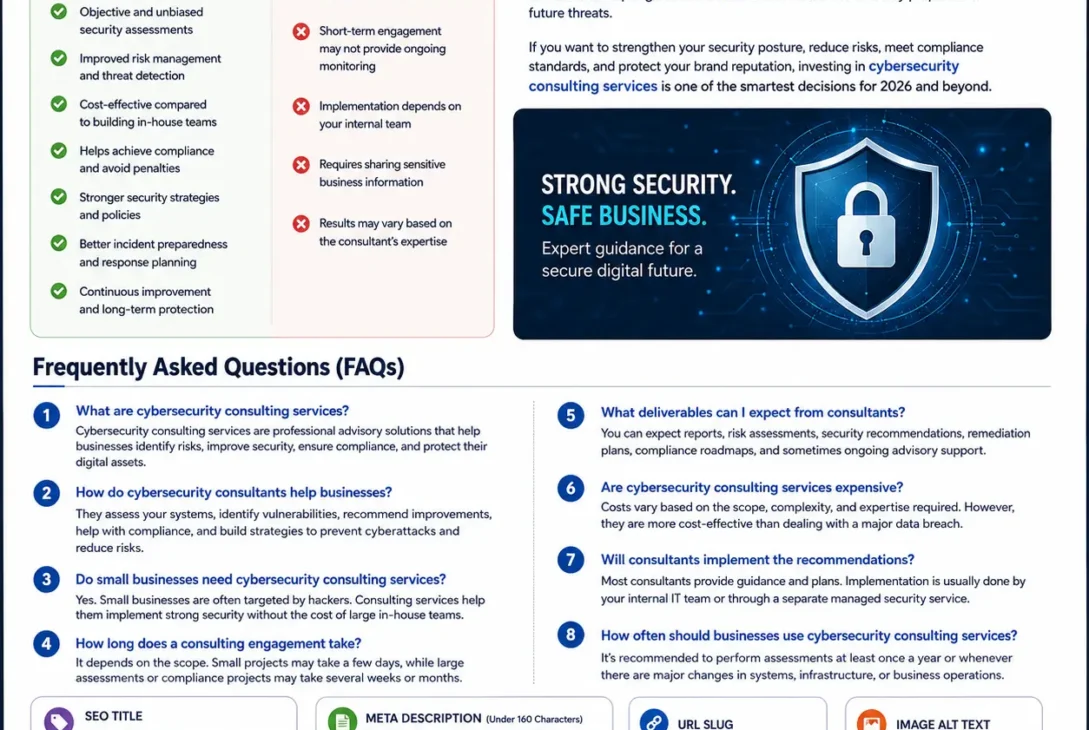
Pros and Cons
Pros
- Provides expert guidance from experienced cybersecurity professionals.
- Identifies security gaps before attackers can exploit them.
- Helps meet compliance requirements such as ISO 27001, HIPAA, GDPR, PCI DSS, and SOC 2.
- Reduces the risk of costly data breaches and ransomware attacks.
- Improves cloud, network, and application security.
- Offers independent and unbiased security assessments.
- Helps build long-term cybersecurity strategies.
- Can be more cost-effective than maintaining a large in-house security team.
- Enhances employee security awareness through training.
- Scales with business growth and changing security needs.
Cons
- Consulting costs may be high for very small businesses.
- Some engagements are project-based and don’t include continuous monitoring.
- Implementation of recommendations may require additional resources.
- Results depend on the quality and experience of the consulting firm.
- Organizations still need internal commitment to maintain security improvements.
Final Verdict
Investing in cybersecurity consulting services is no longer optional for businesses that depend on digital systems. From preventing cyberattacks to improving compliance and strengthening cloud security, professional consultants provide valuable expertise that helps organizations reduce risk and improve resilience.
Whether you’re launching a startup, expanding an e-commerce business, operating a healthcare organization, or managing a large enterprise, cybersecurity consulting services can identify weaknesses before attackers do and create a roadmap for long-term protection.
By selecting an experienced consulting partner with proven certifications, industry knowledge, and a structured assessment process, businesses can significantly improve their overall security posture while protecting customer trust and business continuity.
Frequently Asked Questions (FAQs)
1. What are cybersecurity consulting services?
Cybersecurity consulting services help businesses identify security risks, improve defenses, meet compliance requirements, and develop long-term cybersecurity strategies.
2. Who should use cybersecurity consulting services?
Organizations of all sizes—including startups, healthcare providers, financial institutions, retailers, manufacturers, educational organizations, and government agencies—can benefit from professional security consulting.
3. How much do cybersecurity consulting services cost?
Pricing depends on the project scope, company size, compliance requirements, and the level of expertise needed. Many firms provide customized quotes after an initial assessment.
4. Are cybersecurity consulting services different from managed security services?
Yes. Consulting focuses on assessments, planning, compliance, and strategy, while managed security services provide ongoing monitoring, threat detection, and operational support.
5. How often should a business hire cybersecurity consultants?
Most organizations should perform a comprehensive security assessment at least once a year or after major infrastructure, cloud, or compliance changes.