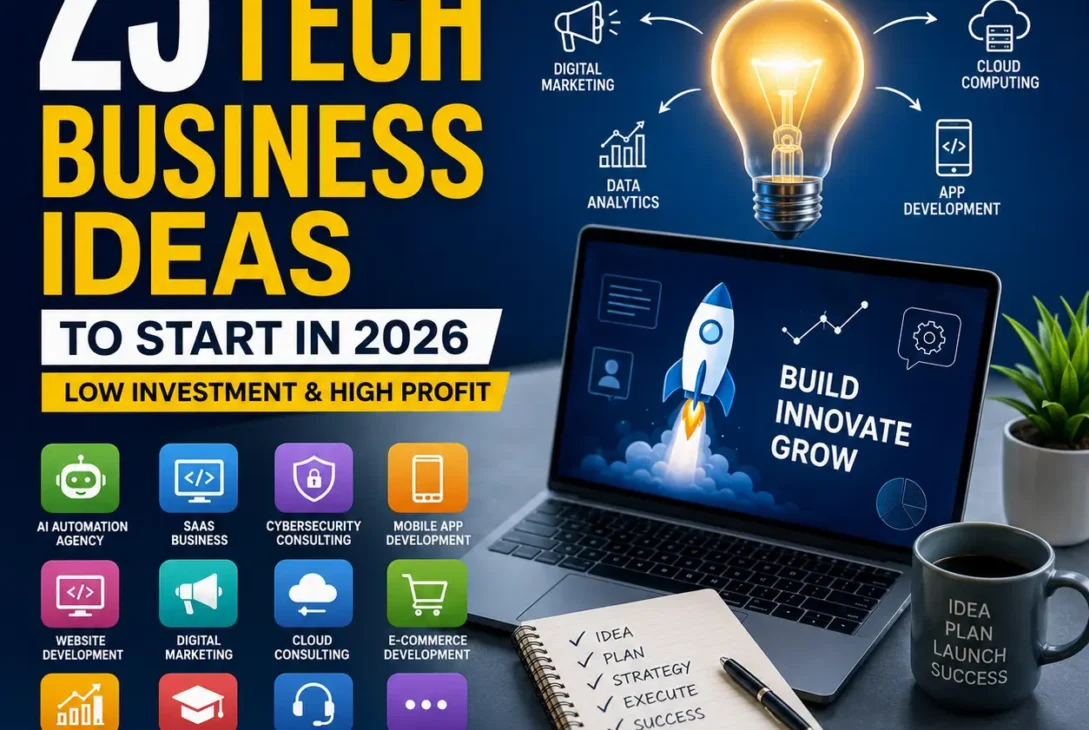
Technology is evolving faster than ever, creating countless opportunities for entrepreneurs to build successful startups. From artificial intelligence and cybersecurity to cloud computing and software development, the digital economy continues to expand across every industry. If you’re looking for profitable tech business ideas, 2026 offers excellent opportunities to launch a scalable business with relatively low startup costs.
Unlike many traditional businesses, technology startups often require less physical infrastructure and can serve customers worldwide through online platforms. Whether you’re a developer, IT professional, freelancer, or aspiring entrepreneur, the right tech business ideas can help you create recurring income while solving real-world problems.
Many modern startups also benefit from cloud services, automation tools, and no-code platforms, making it easier than ever to turn an idea into a business. Even if you don’t have advanced programming skills, you can partner with technical experts or use existing platforms to build innovative digital products.
In this guide, you’ll discover the most profitable tech business ideas for 2026, learn how to choose the right opportunity, compare startup costs, and understand which technology sectors are expected to experience long-term growth.
Table of Contents
- Why Start a Technology Business?
- How to Choose the Right Technology Startup
- 25 Best Tech Business Ideas for 2026
- Startup Cost Comparison
- Online vs Offline Technology Businesses
- Common Mistakes to Avoid
- Future Technology Trends
- Pros and Cons
- Conclusion
- FAQs
Why Start a Technology Business?
The technology industry continues to outperform many traditional sectors because businesses and consumers increasingly depend on digital solutions. Choosing the right tech business ideas allows entrepreneurs to build companies that are scalable, flexible, and capable of serving customers around the world.
Some of the biggest advantages include:
- High growth potential
- Global customer reach
- Lower startup costs for many digital businesses
- Flexible remote work opportunities
- Recurring subscription revenue
- Strong demand across industries
- Easier business automation
- Opportunities to innovate
As businesses continue investing in digital transformation, technology startups are expected to remain one of the fastest-growing business categories.
How to Choose the Right Technology Startup
Not every technology business is suitable for every entrepreneur. Before selecting one of the available opportunities, consider the following factors.
Your Skills
Choose a business that matches your strengths.
Examples include:
- Software development
- Digital marketing
- Graphic design
- Cybersecurity
- Data analysis
- AI development
- IT consulting
Market Demand
Research industries with growing customer demand.
Popular sectors include:
- Artificial intelligence
- SaaS
- Cybersecurity
- FinTech
- HealthTech
- EdTech
- Cloud computing
- E-commerce
Budget
Some businesses require very little capital, while others need significant investment.
Consider expenses such as:
- Website development
- Software tools
- Marketing
- Business registration
- Equipment
- Employee salaries
Scalability
Look for businesses that can grow without dramatically increasing operating costs.
Subscription-based software, online services, and digital products generally scale more efficiently than physical businesses.
25 Best Tech Business Ideas for 2026
1. AI Automation Agency
Businesses increasingly automate repetitive tasks using AI.
Services include:
- AI chatbots
- Workflow automation
- Customer support automation
- AI integrations
Startup Cost: Low–Medium
2. SaaS (Software as a Service)
Subscription software remains one of the most profitable digital business models.
Examples include:
- CRM software
- Project management tools
- Accounting platforms
- HR software
Startup Cost: Medium–High
3. Cybersecurity Consulting
Growing cyber threats have created strong demand for security professionals.
Services may include:
- Security audits
- Penetration testing
- Employee training
- Risk assessments
Startup Cost: Medium
4. Mobile App Development
Businesses continue investing in Android and iOS applications for customer engagement and operational efficiency.
Popular app categories include:
- Fitness
- Education
- Finance
- Productivity
- Healthcare
Startup Cost: Medium
5. Website Development Agency
Every business needs an online presence.
Offer services such as:
- WordPress development
- Shopify stores
- Custom websites
- Landing pages
- Website maintenance
Startup Cost: Low
6. Cloud Consulting
Organizations continue migrating their systems to cloud platforms.
Services include:
- Cloud migration
- Infrastructure planning
- Cost optimization
- Security configuration
Startup Cost: Medium
7. Digital Marketing Agency
Companies constantly seek experts who can help them grow online.
Services include:
- SEO
- PPC advertising
- Social media marketing
- Content marketing
- Email campaigns
Startup Cost: Low
8. IT Support Services
Small businesses often outsource technical support instead of hiring full-time IT staff.
Services may include:
- Network setup
- Computer maintenance
- Troubleshooting
- Software installation
- Remote support
Startup Cost: Low–Medium
9. E-commerce Development
Help businesses launch and optimize online stores using platforms like Shopify, WooCommerce, or Magento.
Startup Cost: Low
10. UI/UX Design Studio
Create user-friendly interfaces for websites, mobile apps, and SaaS platforms.
Startup Cost: Low
11. AI Content Creation Services
Artificial intelligence has transformed how businesses produce content for websites, blogs, social media, and email marketing. Companies increasingly outsource AI-assisted writing, editing, and content strategy to improve productivity while maintaining quality.
Services can include:
- Blog writing
- SEO content
- Product descriptions
- Social media content
- Email campaigns
- AI content optimization
Startup Cost: Low
12. Data Analytics Consulting
Organizations collect massive amounts of data but often lack the expertise to turn it into actionable insights.
Services may include:
- Business intelligence dashboards
- Data visualization
- Customer analytics
- Sales forecasting
- Performance reporting
Startup Cost: Medium
13. Software Testing Company
Every software product requires thorough testing before release.
Offer services such as:
- Manual testing
- Automated testing
- Mobile app testing
- Website testing
- Performance testing
- Quality assurance
Startup Cost: Low
14. Blockchain Development
Blockchain technology continues expanding beyond cryptocurrency into finance, healthcare, logistics, and digital identity.
Potential services include:
- Smart contract development
- Blockchain consulting
- NFT platforms
- Web3 applications
- Digital asset solutions
Startup Cost: Medium–High
15. Managed IT Services
Many small and medium-sized businesses prefer outsourcing their IT operations instead of maintaining an in-house department.
Common services include:
- Network monitoring
- Server management
- Cloud backups
- Security updates
- Help desk support
Startup Cost: Medium
16. Online Tech Training Platform
Create educational courses that teach valuable technical skills.
Popular topics include:
- Programming
- Cybersecurity
- Cloud computing
- Graphic design
- AI tools
- Digital marketing
Courses can generate recurring income through memberships or subscriptions.
Startup Cost: Low
17. IoT Solutions Business
The Internet of Things (IoT) connects smart devices for homes, factories, agriculture, and healthcare.
Business opportunities include:
- Smart home automation
- Industrial monitoring
- Smart agriculture
- Asset tracking
- Energy management
Startup Cost: High
18. Virtual Reality (VR) Development
VR technology is increasingly used in gaming, education, healthcare, and employee training.
Possible services include:
- VR simulations
- Training applications
- Educational experiences
- Real estate virtual tours
- Product demonstrations
Startup Cost: Medium–High
19. Augmented Reality (AR) Solutions
Businesses use AR to improve customer engagement and product visualization.
Examples include:
- Retail shopping apps
- Interior design previews
- Interactive marketing campaigns
- Educational applications
Startup Cost: Medium
20. Tech Recruitment Agency
Technology companies constantly seek qualified professionals.
A recruitment business can specialize in hiring:
- Software developers
- Cybersecurity experts
- Data scientists
- DevOps engineers
- AI specialists
- Cloud architects
Startup Cost: Low
Startup Cost Comparison
| Business | Startup Cost | Skill Level |
|---|---|---|
| AI Automation Agency | Low–Medium | High |
| SaaS Business | Medium–High | High |
| Cybersecurity Consulting | Medium | High |
| Website Development | Low | Medium |
| Digital Marketing Agency | Low | Medium |
| IT Support Services | Low–Medium | Medium |
| Software Testing | Low | Medium |
| Online Tech Training | Low | Medium |
| IoT Solutions | High | High |
| VR Development | Medium–High | High |
Online vs Offline Technology Businesses
| Online Businesses | Offline Businesses |
|---|---|
| SaaS Platforms | Computer Repair Shop |
| Website Development | IT Hardware Store |
| Digital Marketing | Electronics Service Center |
| AI Automation | Networking Installation |
| Content Creation | Corporate IT Consulting |
| Mobile App Development | Device Maintenance Services |
Online businesses generally require lower startup costs and can reach customers worldwide, while offline businesses often depend on local demand and physical infrastructure.
Common Mistakes to Avoid
When launching a technology startup, avoid these common mistakes:
- Choosing an idea without validating market demand.
- Ignoring customer feedback.
- Spending too much before generating revenue.
- Overcomplicating the first product version.
- Neglecting cybersecurity and data protection.
- Failing to build a clear marketing strategy.
- Trying to serve every customer instead of focusing on a niche.
- Not tracking financial performance.
Avoiding these issues can improve your chances of building a sustainable business.
Future Technology Trends
Several industries are expected to experience significant growth over the coming years, creating new opportunities for entrepreneurs.
Some of the fastest-growing areas include:
- Artificial intelligence
- Cybersecurity
- Cloud computing
- Robotics
- Green technology
- FinTech
- HealthTech
- Quantum computing
- No-code development
- Automation software
Businesses aligned with these trends are more likely to benefit from long-term market demand.
https://startup.google.com/
Pros and Cons
Pros
- High demand across almost every industry.
- Many opportunities require low startup investment.
- Easy to scale using digital platforms.
- Ability to serve customers worldwide.
- Potential for recurring revenue through subscriptions.
- Flexible remote work options.
- Encourages innovation and continuous learning.
- Strong long-term market growth.
- Wide range of business models to choose from.
- Suitable for solo entrepreneurs and growing teams.
Cons
- Rapid technological changes require continuous learning.
- Competition can be intense in popular markets.
- Some businesses require advanced technical skills.
- Cybersecurity risks must be managed carefully.
- Marketing costs can increase as competition grows.
- Certain startups may take time to become profitable.
Final Thoughts
Choosing the right tech business ideas can open the door to long-term growth, financial independence, and global opportunities. As technology continues to evolve, entrepreneurs who solve real problems and focus on delivering value are more likely to build successful and sustainable companies.
Before launching your startup, research your target audience, validate your idea, estimate your costs, and create a realistic business plan. Starting with a minimum viable product (MVP) allows you to test demand, collect customer feedback, and improve your product before making larger investments.
Whether you decide to build a SaaS platform, start a cybersecurity consultancy, develop mobile applications, or offer digital marketing services, success depends on consistency, innovation, and understanding your customers’ needs. The best businesses are those that continue adapting as technology and market demands change.
Frequently Asked Questions (FAQs)
1. What are the best tech business ideas for beginners?
Some beginner-friendly options include website development, digital marketing, IT support services, AI content creation, online tech training, and e-commerce development. These businesses often require lower startup costs while offering strong growth potential.
2. Which technology business is the most profitable?
Subscription-based software (SaaS), cybersecurity consulting, AI automation, cloud consulting, and data analytics are among the most profitable technology businesses because they offer recurring revenue and strong market demand.
3. How much money do I need to start a technology business?
The required investment depends on the business model. Service-based businesses such as web development or digital marketing can often be launched with a relatively small budget, while software products and hardware-focused ventures usually require more capital.
4. Can I start a technology business without coding skills?
Yes. Many entrepreneurs build successful companies by hiring developers, working with technical co-founders, or using no-code and low-code platforms to create websites, applications, and digital products.
5. Are tech business ideas still profitable in 2026?
Yes. Growing demand for artificial intelligence, cybersecurity, cloud computing, automation, software services, and digital transformation continues to create profitable opportunities for technology entrepreneurs in 2026.