
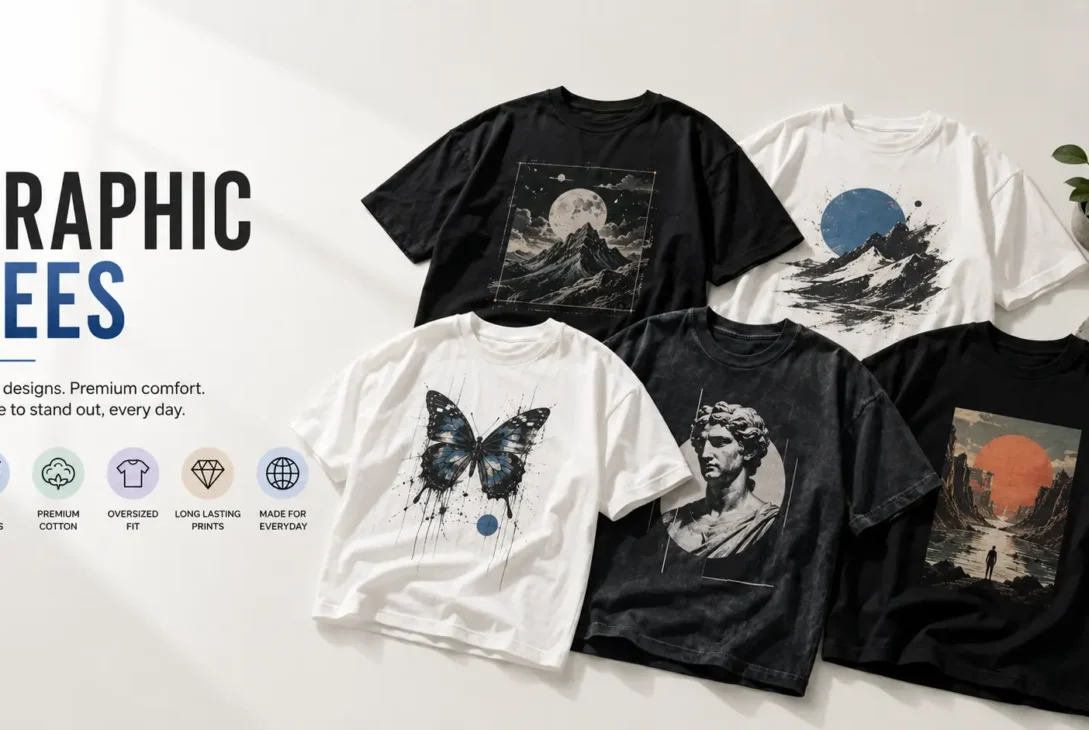
Graphic tees have become one of the most recognizable pieces of casual fashion. They can be simple, bold, artistic, nostalgic, humorous, or heavily influenced by streetwear culture. Unlike a plain T-shirt, a graphic design gives the garment a visual identity that can communicate a person’s interests, personality, or fashion sense.
From vintage illustrations and oversized back prints to minimalist logos and artistic designs, today’s market offers countless options. This variety makes graphic T-shirts suitable for almost anyone, whether you prefer a clean everyday outfit or a more expressive streetwear look.
Graphic clothing is also important for independent fashion brands. A strong T-shirt design can become the centerpiece of a collection and help customers recognize a brand.
But choosing a good shirt isn’t only about finding an attractive design. Fit, fabric, printing technique, construction, durability, and styling all matter.
This guide explains the most popular styles, printing methods, buying considerations, styling ideas, care instructions, and important things to know before purchasing or creating graphic apparel.
Table of Contents
- What Are Graphic Tees?
- Why Are Graphic Tees So Popular?
- 7 Popular Graphic Tee Styles
- Graphic Tee Printing Methods
- How to Choose the Right Graphic Tee
- How to Style Graphic Tees
- How to Take Care of Graphic T-Shirts
- How to Buy Quality Graphic Tees
- Graphic Tees for Different Occasions
- Graphic Tees for Clothing Brands
- Graphic Tees and Sustainable Fashion
- Frequently Asked Questions
- Final Verdict
What Are Graphic Tees?
Graphic tees are T-shirts featuring visual elements such as illustrations, artwork, typography, photographs, logos, symbols, patterns, or other printed designs.
The artwork can cover a small section of the garment or occupy most of the front or back.
Some designs are intentionally subtle. A small logo or illustration near the chest can add personality without dominating an outfit. Other designs are much more noticeable, using large artwork, bold colors, detailed illustrations, or oversized typography.
The garment itself can also have different silhouettes.
Common options include:
- Regular-fit T-shirts
- Relaxed-fit shirts
- Oversized T-shirts
- Boxy T-shirts
- Heavyweight cotton shirts
- Vintage-wash shirts
- Cropped styles
- Long-sleeve graphic shirts
Because of these variations, graphic clothing isn’t limited to one particular fashion style.
A vintage graphic can work with classic denim, while an oversized illustrated shirt can fit naturally into a modern streetwear outfit.
Why Are Graphic Tees So Popular?
The biggest advantage of graphic T-shirts is their ability to communicate something visually.
A plain shirt can be extremely versatile, but artwork immediately gives the garment a particular identity.
Someone might choose a design because they like a particular artist, music genre, sports team, movie, game, cultural reference, or visual style.
Others simply choose artwork because they like the colors or illustration.
Personal Expression
Clothing has always been a form of self-expression.
Graphic designs make this especially obvious because the artwork is visible and can communicate an interest or aesthetic without requiring an explanation.
This is one reason graphic apparel is popular among younger fashion audiences and independent streetwear communities.
Easy Everyday Styling
Another reason these shirts remain popular is their versatility.
A T-shirt can be worn with:
- Jeans
- Cargo pants
- Chinos
- Shorts
- Joggers
- Denim jackets
- Overshirts
- Hoodies
- Sneakers
You don’t need an elaborate wardrobe to create an outfit around one good design.
Variety of Designs
There is practically no limit to what can be printed on a T-shirt.
Designers can create detailed illustrations, simple typography, abstract artwork, vintage graphics, photographs, technical diagrams, logos, or completely original concepts.
This makes the category much broader than traditional logo merchandise.
7 Popular Graphic Tee Styles
1. Vintage Graphic Tees
Vintage-inspired designs are among the most recognizable styles.
They often use faded colors, distressed textures, retro typography, old-school illustrations, classic advertising aesthetics, or artwork inspired by previous decades.
A modern shirt doesn’t need to be genuinely old to achieve this appearance.
Manufacturers can use garment washing, fading techniques, distressed artwork, and specialized printing to create a worn-in look.
Vintage designs work especially well with denim, workwear, sneakers, boots, and casual jackets.
Popular themes include:
- Classic cars
- Travel posters
- Retro sports
- Old advertisements
- Motorcycle graphics
- Vintage typography
- Historical illustrations
The appeal comes from the feeling that the shirt has a story behind it.
2. Oversized Graphic Tees
Oversized T-shirts have become strongly associated with contemporary streetwear.
They usually have a wider body, dropped shoulders, longer sleeves, or a deliberately relaxed silhouette.
The larger surface area also gives designers more room for artwork.
A large back print combined with a small chest design is a common approach.
Oversized shirts can be paired with wide-leg jeans, cargo trousers, loose shorts, or straight-fit denim.
The key is balance.
If the shirt is very loose, choosing a structured or slightly cleaner bottom can prevent the entire outfit from appearing shapeless.
3. Minimalist Graphic Tees
Not every design needs to be large.
Minimalist shirts often use small illustrations, subtle symbols, simple logos, clean typography, or limited colors.
This style is ideal for people who want something more interesting than a completely plain T-shirt without wearing an extremely bold design.
A small chest graphic on a black, white, gray, cream, or washed shirt can be extremely easy to combine with other clothing.
Minimalist designs are also popular among brands that want a more premium or understated visual identity.
4. Typography Graphic Tees
Typography-based designs use words, phrases, numbers, or lettering as the main visual element.
The font itself becomes part of the artwork.
A condensed bold typeface can create an industrial or athletic appearance, while handwritten lettering can feel more artistic.
Typography also allows brands to communicate messages directly.
However, good typography requires more than simply placing words on a shirt.
Spacing, hierarchy, font selection, alignment, and composition all affect the final result.
5. Artistic Graphic Tees
Artistic designs can transform a basic T-shirt into something closer to wearable artwork.
These shirts may feature digital illustrations, paintings, sketches, photography, abstract compositions, or highly detailed drawings.
Independent artists often use this style because it gives them freedom to develop a recognizable visual language.
Artistic shirts can become the focal point of an outfit, so the rest of the clothing is often kept relatively simple.
6. Streetwear Graphic Tees
Streetwear has played a major role in the growth of graphic apparel.
Streetwear designs often combine oversized silhouettes with bold illustrations, large back prints, symbols, distressed textures, unconventional typography, and strong visual contrasts.
Some designs are deliberately loud.
Others use a restrained approach with muted colors and smaller graphics.
The important feature is usually the overall identity rather than simply the presence of artwork.
A streetwear collection often uses related colors, fonts, symbols, and themes across multiple garments.
7. Pop-Culture and Music Graphic Tees
Music, movies, gaming, sports, and other forms of entertainment have influenced T-shirt design for decades.
Band shirts are one of the most recognizable examples.
Movie and gaming merchandise can also turn popular characters, artwork, or visual references into wearable products.
However, buyers and brands should pay attention to licensing.
Official merchandise is generally produced with permission from the relevant artist, company, team, or rights holder.
Using copyrighted artwork without authorization can create legal problems.
https://www.cottonworks.com/
Graphic Tee Printing Methods
The printing method can have a major effect on appearance, durability, texture, and production cost.
There isn’t one technique that is perfect for every design.
Screen Printing
Screen printing is one of the most established methods for printing apparel.
Ink is pushed through a prepared screen onto the garment.
It is particularly effective for designs with solid colors and can produce durable results when the artwork is properly prepared and the ink is correctly cured.
Screen printing can also become economical for larger production runs because the setup cost is spread across multiple garments.
Direct-to-Garment Printing
Direct-to-garment, commonly known as DTG, uses specialized printers to apply ink directly onto the fabric.
It can be useful for detailed artwork, photographs, gradients, and designs containing many colors.
DTG is particularly attractive for smaller production runs because it doesn’t require the same traditional screen setup used for conventional screen printing.
Direct-to-Film Printing
Direct-to-film, or DTF, prints artwork onto a special film before transferring the design onto the garment.
The technique can support detailed, colorful designs and can work with different garment colors.
DTF has become increasingly popular for custom apparel and small-to-medium production.
Heat Transfer
Heat-transfer methods use printed or cut materials that are applied to fabric using heat and pressure.
They can be useful for names, numbers, small custom orders, promotional products, and certain specialty designs.
The final result depends on the transfer material, application temperature, pressure, garment fabric, and production quality.
How to Choose the Right Graphic Tee
Choosing the right shirt requires looking beyond the artwork.
Consider the Fit
Think about how you normally dress.
If you prefer traditional clothing, a regular or relaxed fit may work best.
If you prefer contemporary streetwear, an oversized or boxy silhouette may be more appropriate.
The same artwork can look completely different depending on the proportions of the garment.
Check the Fabric
Cotton remains one of the most common choices.
Lightweight cotton can be comfortable in warm conditions, while heavyweight cotton can create a more structured appearance.
Blended fabrics can provide different combinations of softness, stretch, durability, and moisture management.
There is no single perfect fabric for everyone.
Examine the Print
The artwork should appear sharp and properly positioned.
Look for clear lines, consistent colors, accurate alignment, and a print that appears appropriate for the garment.
If buying online, examine product photographs carefully and look for information about the printing process when available.
Check the Size Chart
Never assume that every brand follows identical measurements.
An oversized shirt from one company may fit similarly to a relaxed shirt from another.
Check chest width, length, shoulder measurements, and sleeve dimensions when buying online.
How to Style Graphic Tees
A graphic shirt can be the easiest part of an outfit to style.
For a simple casual look, combine one with straight-leg jeans and sneakers.
For a streetwear outfit, try an oversized shirt with cargo pants and sneakers.
For colder weather, layer it underneath a denim jacket, bomber, overshirt, or hoodie.
You can also use accessories such as caps, watches, bags, or simple jewelry.
The most important rule is balance.
If the shirt contains a very large or colorful design, keeping the rest of the outfit relatively simple can allow the artwork to stand out.
How to Take Care of Graphic T-Shirts
Even high-quality graphic tees can lose their appearance if they are repeatedly exposed to excessive heat, friction, or harsh washing conditions.
Wash Inside Out
Turning the shirt inside out before washing reduces direct friction between the artwork and other clothing.
This simple habit can help protect printed areas.
Use Cool Water
Cool or cold water is generally a safer choice for printed garments.
Hot washing can contribute to shrinkage and may place additional stress on certain printing methods.
Always follow the garment’s care label because different fabrics have different requirements.
Avoid Excessive Dryer Heat
High temperatures can affect both the garment and its printed artwork.
Use a lower dryer setting when appropriate, or allow the shirt to air dry.
Don’t Iron Directly Over the Design
If ironing is necessary, avoid placing a hot iron directly on the printed artwork.
Turn the shirt inside out or use an appropriate protective layer.
How to Buy Quality Graphic Tees
Price doesn’t automatically determine quality.
Some affordable shirts can have excellent artwork and construction, while expensive products can still disappoint.
Look at several factors together.
Fabric Quality
Check the fabric composition and weight.
A heavyweight shirt may feel more substantial, while a lighter garment may be more comfortable during hot weather.
Construction
Look at the collar, seams, sleeves, and stitching.
A quality garment should have consistent construction and a collar that maintains its shape reasonably well.
Print Quality
The graphic should be sharp, properly positioned, and suitable for the fabric.
If possible, check customer photographs and reviews before ordering.
Brand Reputation
Established brands aren’t automatically better, but consistent customer reviews can provide useful information about sizing, durability, and printing quality.
Graphic Tees for Different Occasions
These shirts are mainly associated with casual clothing, but the right design can work in many relaxed environments.
For everyday errands, a simple design with jeans or chinos is easy to wear.
For concerts and festivals, music-related or artistic designs can work particularly well.
For streetwear outfits, oversized silhouettes and larger artwork can create a stronger visual effect.
For relaxed social events, minimalist designs can add personality without becoming the center of attention.
The most important consideration is whether the design and fit suit the environment.
Graphic Tees for Clothing Brands
Graphic T-shirts are also an accessible product category for independent clothing brands.
A strong design can become the foundation of an entire collection.
However, producing successful apparel involves more than creating attractive artwork.
Brands need to consider:
- Target audience
- Garment quality
- Design direction
- Printing method
- Production costs
- Pricing
- Photography
- Packaging
- Marketing
- Intellectual-property rights
Consistency is particularly important.
If every product uses completely different artwork and design language, customers may struggle to identify the brand.
A collection with related colors, typography, themes, and illustration styles usually creates a stronger identity.
Original Artwork Matters
Brands should create original artwork or obtain the appropriate licenses.
Using copyrighted characters, photographs, logos, illustrations, or other protected material without authorization can create legal issues.
Original artwork also gives a company the opportunity to establish a unique visual identity.
Graphic Tees and Sustainable Fashion
Sustainability has become increasingly important in the clothing industry.
Consumers may consider fabric selection, manufacturing practices, packaging, garment durability, and how long a product is likely to remain wearable.
Durability matters because a shirt that remains useful for years doesn’t need to be replaced as frequently.
Buyers should also examine sustainability claims carefully.
Terms such as “eco-friendly” don’t automatically explain how a garment was produced.
Look for specific information about materials, manufacturing, certifications, and supply-chain practices when sustainability is important to you.
Frequently Asked Questions
What are graphic tees?
Graphic tees are T-shirts featuring artwork, illustrations, typography, photographs, logos, symbols, patterns, or other visual designs.
Are graphic tees still popular?
Yes. They remain a major part of casual fashion and streetwear, with vintage, oversized, minimalist, artistic, and typography-based designs continuing to appear across the market.
How should graphic tees be washed?
Turn them inside out, use cool water when appropriate, follow the care label, and avoid excessive heat.
Do graphic tees shrink?
They can, particularly when made from cotton and exposed to high heat. Always check the garment’s care instructions.
Are oversized graphic tees good for streetwear?
Yes. Oversized silhouettes are widely associated with modern streetwear and provide a large surface area for bold artwork.
Which printing method is best?
It depends on the design and production requirements. Screen printing can be excellent for certain designs and larger quantities, while DTG and DTF can be useful for detailed, colorful artwork and smaller runs.
Can I create my own graphic T-shirt?
Yes. You can create original artwork and work with a local printer, apparel manufacturer, or print-on-demand provider.
Are graphic tees good for clothing brands?
Yes. They can be a relatively accessible way for an independent brand to introduce its visual identity and build a collection.
Final Verdict
Graphic tees remain one of the most versatile pieces of casual clothing.
Their popularity comes from the combination of comfort, affordability, and visual expression. A basic T-shirt becomes much more distinctive when it features original artwork, typography, illustrations, or a meaningful reference.
The best choice depends on your personal style.
Vintage designs work well for nostalgic outfits, oversized shirts fit naturally into streetwear, minimalist graphics are easy to wear every day, and artistic designs can become the focal point of an outfit.
If you’re buying a T-shirt, don’t focus only on the artwork. Consider the fit, fabric, construction, sizing, print quality, and care requirements.
If you’re creating shirts for a clothing brand, focus on original artwork, consistent branding, quality garments, suitable printing methods, and a clearly defined audience.
Ultimately, the best graphic T-shirt combines a design you genuinely like with a garment that feels comfortable and holds up to regular wear.
Key Takeaways
- Graphic tees combine everyday T-shirts with visual artwork or messaging.
- Vintage, oversized, minimalist, typography, artistic, streetwear, and pop-culture designs are popular.
- Screen printing, DTG, DTF, and heat transfer offer different benefits.
- Fit and fabric are just as important as artwork.
- Washing shirts inside out can help protect printed designs.
- Excessive heat can contribute to shrinkage and print damage.
- Brands should use original or properly licensed artwork.
- Quality and durability are important when buying apparel.
- Graphic T-shirts remain a flexible option for casual and streetwear outfits.