
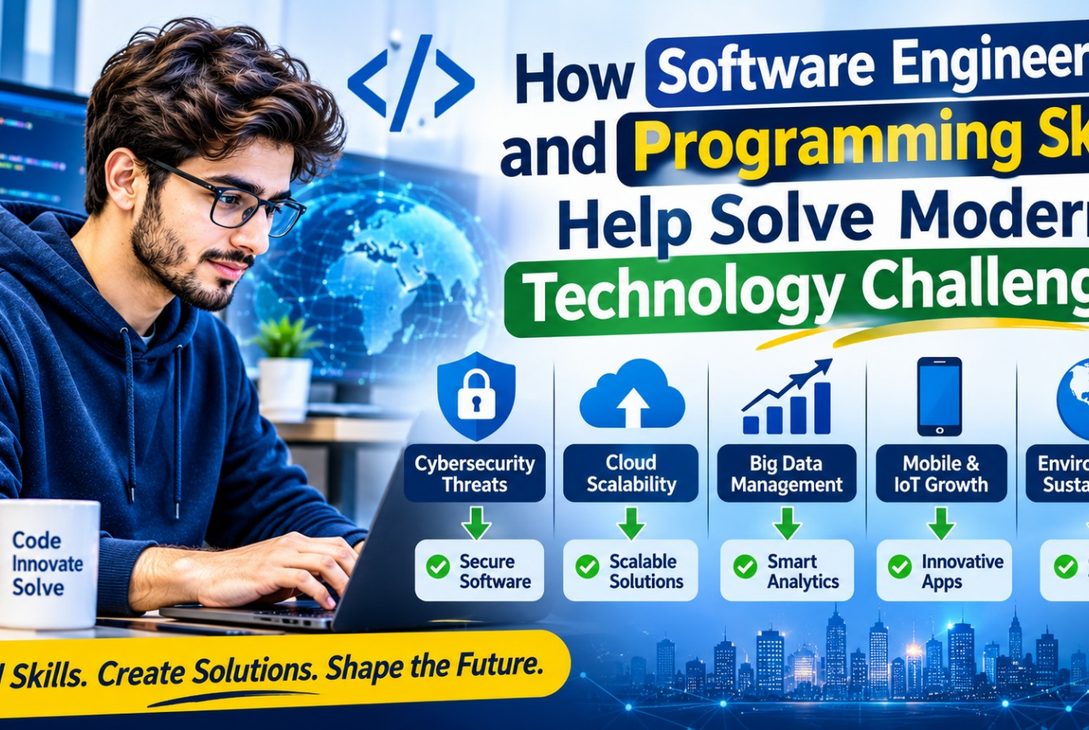
Students looking for UK assignment help may benefit from understanding how software engineering and programming skills address modern technology challenges. As organisations increasingly depend on digital systems, developers must create software that is secure, reliable, efficient, and easy to maintain. From developing web applications to improving cybersecurity, these skills help solve practical problems and support technological progress.
Learning software engineering principles alongside programming techniques enables students to understand how digital solutions are planned, developed, tested, and improved. These abilities also strengthen logical thinking, creativity, and problem-solving.
1. Understand the Foundations of Software Engineering
Software engineering involves structured methods for designing, developing, testing, and maintaining software applications. It helps developers manage complex projects and ensure that systems meet user requirements.
Important principles include requirements analysis, system design, documentation, testing, and maintenance. Following these practices can reduce errors and make applications easier to update.
For example, developers creating an online shopping platform must consider product management, payment processing, user experience, and data security before launching the system.
2. Develop Strong Programming Skills
Programming allows developers to translate ideas into instructions that computers can execute. Languages such as Python, Java, JavaScript, and C++ support applications ranging from website development to automation and data processing.
Students should focus on understanding programming logic rather than simply memorising code. Practising variables, loops, functions, data structures, and algorithms helps them approach unfamiliar problems confidently.
Coding exercises, debugging tasks, and small projects provide opportunities to apply these concepts and develop practical experience.
3. Solve Problems Through Efficient Software Design
Modern technology challenges often require solutions that are efficient, scalable, and easy to maintain. Software engineers must identify the underlying problem before selecting an appropriate technical approach.
For instance, an application may become slow as its user base grows. Developers can examine algorithms, database queries, and system architecture to identify performance issues.
Breaking complex problems into smaller tasks also makes development more manageable. This approach helps programmers test individual components and improve the reliability of the final application.
4. Improve Cybersecurity and Data Protection
Cybersecurity is an important consideration in modern software development. Applications can face risks such as unauthorised access, data breaches, insecure authentication, and software vulnerabilities.
Developers should apply secure coding practices throughout the development process. Important measures include input validation, access controls, encryption, secure authentication, and regular security testing.
Students can strengthen their knowledge by studying common software vulnerabilities and learning how developers prevent them. Building security into applications from the beginning helps reduce risks and protect users.
5. Use Testing and Debugging to Improve Reliability
Software testing helps developers identify defects before applications reach users. Debugging involves locating the cause of an error and correcting it without introducing additional problems.
Common testing methods include unit testing, integration testing, system testing, and user acceptance testing. Each method examines different aspects of an application’s functionality.
Students can practise these techniques by testing individual functions, examining unusual inputs, and checking whether applications behave as expected. Careful testing improves software quality and reduces unexpected failures.
6. Apply Programming Skills to Real-World Challenges
Practical projects help students connect programming knowledge with everyday technology needs. Examples include developing a task management application, creating a website, automating repetitive processes, or building a basic data analysis tool.
Students can strengthen their understanding by working through each development stage, from identifying requirements to testing the final product. Those seeking additional subject-specific guidance can explore a Software engineering assignment service to improve their understanding of software design, development methods, and technical concepts while maintaining academic integrity.
7. Embrace Collaboration and Modern Development Tools
Software projects often involve developers, designers, testers, and project managers working together. Effective communication helps teams coordinate tasks, share information, and resolve technical issues.
Version control systems such as Git allow developers to track code changes, collaborate on projects, and restore earlier versions when necessary. Development environments and automated testing tools can also improve productivity.
Students can build these skills through group projects and personal coding portfolios. Learning to explain technical decisions clearly is just as valuable as writing functional code.
8. Develop Programming Knowledge Through Continued Practice
Technology continues to evolve through artificial intelligence, cloud computing, automation, and connected devices. Software developers must keep learning to understand new tools and changing technical requirements.
Students can strengthen their programming knowledge through structured practice, coding exercises, and independent projects. A Programming Assignment Service can also be explored for subject-specific guidance on programming concepts, debugging errors, and approaching complex coding tasks responsibly.
To prepare for changing technology demands, students should:
- Explore new technologies: Understand how emerging tools address practical problems.
- Build projects: Apply programming concepts to realistic challenges.
- Review code: Identify errors, inefficiencies, and opportunities for improvement.
- Continue learning: Update technical knowledge as programming languages and development practices evolve.
Conclusion
Software engineering and programming skills play an important role in solving modern technology challenges. From developing secure applications to improving system performance, these abilities help transform ideas into reliable digital solutions.
By learning programming fundamentals, applying structured development methods, testing software carefully, and collaborating effectively, students can strengthen their technical knowledge and problem-solving abilities. Continuous learning and practical experience can also prepare them for future opportunities in software development and technology.