
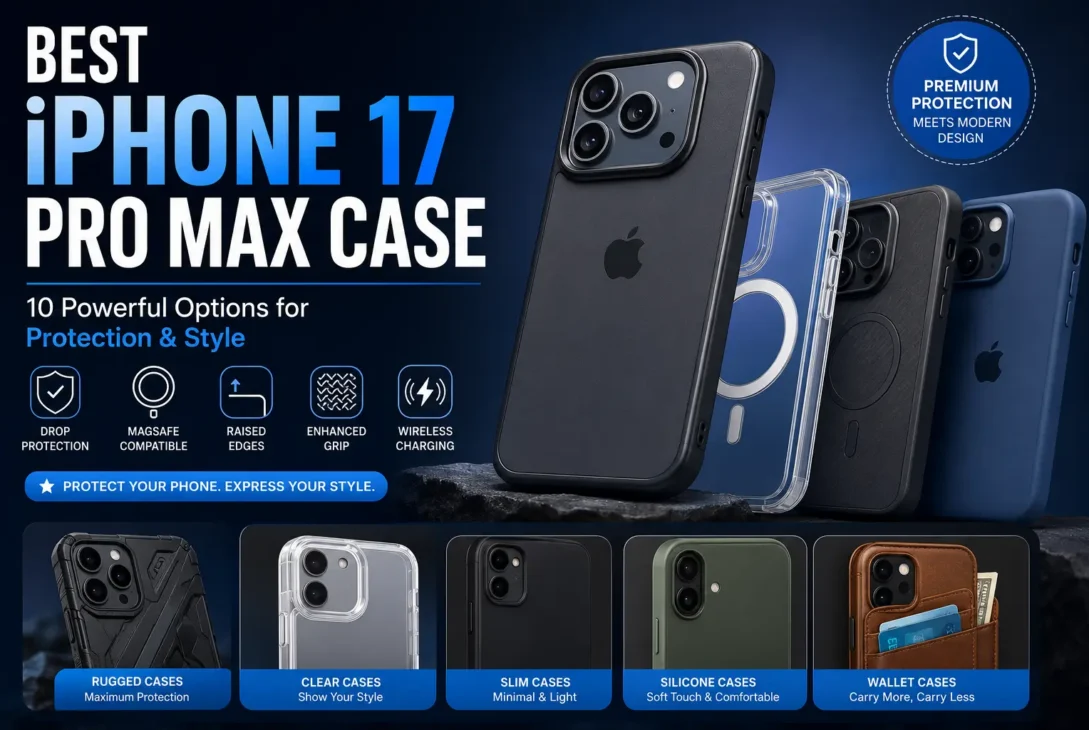
Buying an iPhone 17 Pro Max case is one of the easiest ways to protect Apple’s largest Pro model from scratches, drops, and everyday wear. But choosing the right case isn’t as simple as picking the first attractive design you see.
A good case needs to balance protection, size, grip, camera protection, button access, wireless charging compatibility, and overall appearance. Some users want a slim case that keeps the phone feeling close to its original design, while others prefer maximum protection even if it adds extra thickness.
The best choice ultimately depends on how you use your phone.
If you frequently carry your iPhone without a bag, work in environments where drops are possible, or simply want better protection against accidental damage, a more protective design may be worthwhile. If your priority is keeping the phone thin and lightweight, a minimalist option may make more sense.
What Should You Look for in an iPhone 17 Pro Max Case?
Before buying a case, consider the features that matter most to you.
A well-designed case should fit the phone precisely and provide access to its buttons, ports, speakers, and cameras without interfering with normal use.
Here are the most important factors to consider.
Protection
Protection is usually the primary reason people buy a case.
Look for a design with raised edges around the display and camera area. These raised sections can help prevent the screen or camera lenses from directly touching a flat surface when the phone is placed face down or on its back.
For users who are more concerned about accidental drops, a case with reinforced corners and shock-absorbing materials can provide additional protection.
However, maximum protection usually comes with additional bulk.
MagSafe Compatibility
MagSafe compatibility is another important consideration for the iPhone 17 Pro Max.
A compatible case can allow accessories such as magnetic chargers, wallets, stands, and mounts to attach to the back of the phone.
If you already use MagSafe accessories, make sure the case is designed to work properly with the magnetic system.
A poorly designed magnetic case can weaken the connection or make accessories less reliable.
Apple also offers official cases designed around its MagSafe ecosystem, so buyers who want first-party compatibility can consider Apple’s own options.
https://www.apple.com/newsroom/2025/09/apple-unveils-iphone-17-pro-and-iphone-17-pro-max
Size and Weight
The phone itself is already large.
Adding a thick protective case can make it noticeably larger and heavier.
This is particularly important for people who frequently use their phone with one hand or keep it in a pocket.
A slim case may provide less protection than a rugged model, but it can preserve more of the original feel.
Think about your normal environment before deciding how much bulk you’re willing to accept.
Grip
A slippery case can be frustrating.
Some glossy materials look attractive but may provide less grip than textured surfaces.
If you frequently use your phone while walking, commuting, or working, a case with a secure texture around the edges may be more comfortable.
Grip is also important because a case that feels secure in your hand can reduce the likelihood of accidentally dropping the phone in the first place.
Camera Protection
The camera area deserves special attention.
A good case should protect the area surrounding the camera system without blocking the lenses, flash, or other sensors.
A raised camera lip can help keep the camera area away from surfaces when the phone is placed on a table.
However, the exact design varies between cases, so check product photos carefully before purchasing.
Different Types of Cases
There isn’t one case design that works for everyone.
The market includes several categories, each aimed at a different type of user.
Slim Cases
Slim cases are designed for people who want basic everyday protection without significantly increasing the size of the phone.
They are usually lightweight and easy to carry.
A slim design can be ideal if you rarely drop your phone and mainly want protection against scratches, minor bumps, and everyday wear.
The trade-off is that slim cases generally don’t provide the same level of drop protection as rugged models.
Clear Cases
Clear cases are popular because they allow the phone’s original design and color to remain visible.
They’re particularly useful if you like the appearance of the iPhone and don’t want to cover it with an opaque case.
When choosing a clear case, pay attention to the material.
Some clear materials can become discolored over time, especially with regular exposure to sunlight, heat, and skin oils.
A high-quality clear case can provide a good balance between appearance and protection.
Silicone Cases
Silicone cases offer a soft-touch feel and generally provide good grip.
They’re often comfortable to hold and can work well for everyday use.
The material can also provide some shock absorption.
The downside is that softer materials can attract dust and lint, particularly when the phone is carried in clothing pockets.
Rugged Cases
Rugged cases are designed for users who prioritize protection above everything else.
They commonly feature reinforced corners, thicker construction, raised edges, and multiple protective layers.
These cases can be useful for people who work outdoors, travel frequently, participate in physical activities, or have a history of dropping their phones.
The major disadvantage is size.
A rugged case can make an already large phone significantly thicker.
Wallet Cases
Wallet-style designs combine phone protection with storage for cards or other small items.
They can reduce the number of things you need to carry.
However, wallet cases can be thicker than standard cases.
If you frequently use MagSafe accessories, also check whether the wallet design is compatible with your existing setup.
Official Apple Cases
For buyers who want first-party accessories, Apple’s official case lineup is worth considering.
Apple introduced dedicated cases for the iPhone 17 Pro and iPhone 17 Pro Max, including Silicone, Clear, and TechWoven designs.
The official options are designed specifically around the phone and Apple’s accessory ecosystem.
This can be attractive to buyers who prioritize fit, appearance, and integration with MagSafe accessories.
The main downside is price.
Official Apple cases can cost more than many third-party alternatives, so shoppers should decide whether first-party design and integration justify the additional cost.
Third-Party Cases
Third-party manufacturers offer a much wider range of designs and price points.
You can find cases focused on:
- Extreme drop protection
- Minimalist designs
- Transparent materials
- Fashion-focused designs
- Extra grip
- Wallet functionality
- Camera protection
- Built-in stands
- Magnetic accessories
Some third-party cases can provide excellent value.
However, quality varies considerably.
Before buying, look at the manufacturer’s specifications, return policy, customer reviews, material information, and compatibility details.
Don’t choose a case solely because it is inexpensive.
How Much Protection Do You Actually Need?
The right level of protection depends on your lifestyle.
If you work at a desk, rarely drop your phone, and mainly want to prevent scratches, a slim case may be enough.
If you commute every day and regularly use your phone outdoors, a medium-protection case may provide a better balance.
If your phone is exposed to construction sites, outdoor activities, travel, or frequent drops, a rugged design is likely more appropriate.
There is no benefit in buying an extremely bulky case if you dislike using it and eventually remove it.
Likewise, buying an ultra-thin case makes little sense if your main concern is surviving serious drops.
Case Compatibility Matters
One of the most important things to check before purchasing is exact model compatibility.
Cases are designed around the dimensions, button positions, camera arrangement, and other physical characteristics of a specific phone.
Don’t assume that a case made for another iPhone model will fit correctly.
Look specifically for compatibility with the iPhone 17 Pro Max.
This is especially important when shopping online because product listings can sometimes group several iPhone models together.
Check the exact model name in the title and specifications before placing an order.
Does a Case Affect MagSafe?
It can.
A properly designed MagSafe-compatible case should allow compatible magnetic accessories to connect through the case.
However, thick materials or poorly positioned magnets can affect the strength of the connection.
If you use a MagSafe charger, stand, car mount, or wallet regularly, prioritize a case specifically designed for MagSafe rather than assuming every case will work equally well.
What About Wireless Charging?
Wireless charging compatibility is another feature worth checking.
A case should not unnecessarily interfere with the charging system.
Magnetic cases can also make alignment easier with compatible accessories.
If wireless charging is part of your daily routine, make sure the case you’re considering explicitly supports it.
Best Case Style for Everyday Users
For the average user, a balanced case is often the best choice.
You don’t necessarily need the thickest rugged case available.
A good everyday design should provide:
- Reliable basic drop protection
- Raised screen edges
- Camera protection
- Comfortable grip
- MagSafe compatibility
- Accurate button cutouts
- Easy access to the charging port
- Reasonable weight
This type of case provides protection without making the phone unnecessarily bulky.
Best Case Style for Maximum Protection
If protection is your top priority, choose a rugged case with reinforced corners and a stronger outer shell.
Look for designs that protect the edges and camera area while maintaining access to the phone’s controls.
A rugged case may also be useful if you frequently use the phone outdoors.
The trade-off is obvious: more protection generally means more weight and thickness.
Best Case Style for Minimalists
Minimalists usually want the smallest possible case that still offers meaningful protection.
A slim case can preserve more of the phone’s original dimensions and appearance.
This can be particularly appealing if you like the design of the iPhone 17 Pro Max and don’t want to hide it behind a thick protective shell.
The key is understanding the compromise.
A minimalist case should not be expected to provide the same protection as a heavy-duty rugged model.
How to Avoid Buying the Wrong Case
Before ordering, check five things.
First, verify the exact phone model.
Second, confirm MagSafe compatibility if you use magnetic accessories.
Third, check the material and thickness.
Fourth, look for raised edges around the display and camera.
Finally, read recent customer feedback.
Don’t rely entirely on promotional images.
Real-world reviews can reveal issues such as slippery surfaces, weak magnets, discoloration, poor button feedback, or excessive bulk.
The Bottom Line
The best case isn’t necessarily the most expensive or the most protective.
It is the one that matches the way you use your phone.
A slim case makes sense for users who prioritize portability.
A clear case is ideal for showing the phone’s original design.
A silicone option can provide a comfortable grip for everyday use.
A rugged case is better for people who regularly expose their phone to drops and demanding environments.
And for people invested in Apple’s magnetic accessory ecosystem, a properly designed MagSafe-compatible case can make everyday charging and accessory use much more convenient.
Before buying, focus on protection, fit, grip, camera coverage, wireless charging, MagSafe compatibility, and overall size.
In the next section, we’ll compare the most important case styles and explain which option makes the most sense for different types of iPhone 17 Pro Max owners.
Best iPhone 17 Pro Max Case Options by User Type
The right case depends heavily on what you expect from it. Instead of choosing based only on appearance or price, match the case style to your daily routine.
Best for Everyday Protection
For most people, a standard protective case is the best overall choice.
Look for a case with a comfortable grip, raised edges, camera protection, shock-absorbing construction, and MagSafe compatibility.
This combination provides enough protection for everyday accidents without making the phone unnecessarily bulky.
Best for Maximum Drop Protection
If you regularly drop your phone or work in a demanding environment, choose a rugged design.
A rugged case should have reinforced corners and a strong outer shell while keeping the cameras and display protected from direct contact with surfaces.
The downside is additional thickness.
If you don’t need extreme protection, carrying a heavy-duty case every day may become inconvenient.
Best for a Slim Setup
A slim case is better suited to people who prioritize portability.
It can protect the phone from scratches and minor impacts while keeping the original shape more noticeable.
However, don’t expect an ultra-thin case to provide the same protection as a rugged model.
Best for Showing the Phone’s Design
Clear cases are ideal if you like the original appearance of the iPhone 17 Pro Max.
They provide protection without completely covering the phone’s design.
When buying one, check the material quality and whether the manufacturer addresses long-term yellowing or discoloration.
Best for MagSafe Users
If you regularly use magnetic chargers, wallets, stands, or car mounts, MagSafe compatibility should be near the top of your checklist.
Choose a case specifically designed for MagSafe rather than assuming every magnetic-looking case will provide the same connection strength.
A properly designed case should allow accessories to attach securely while maintaining convenient wireless charging.
Apple vs Third-Party Cases
Apple’s official cases are appealing to users who want first-party design and integration.
Third-party manufacturers, however, generally provide far more variety.
Apple Cases
Advantages can include:
- Designed specifically for the phone
- Consistent fit
- Apple’s design language
- MagSafe integration
- Official accessory ecosystem
The main disadvantage is price.
Third-Party Cases
Third-party options can offer:
- More designs
- More price ranges
- Rugged alternatives
- Specialized features
- Different materials
- Additional grip options
The quality can vary considerably, so research is more important.
A reputable third-party manufacturer can provide excellent protection, while an unknown low-cost case may have poor materials or inaccurate compatibility information.
How Much Should You Spend?
You don’t necessarily need to spend a huge amount on protection.
The ideal budget depends on what you need.
A basic case can be enough for someone who primarily wants scratch protection.
A mid-range case may offer better materials, stronger construction, and magnetic compatibility.
Premium cases can provide higher-quality materials, specialized designs, or additional features.
Rather than choosing based on price alone, consider the cost of replacing or repairing an expensive phone.
Spending slightly more on a well-designed case can be reasonable if it provides meaningful protection and you plan to use it for a long time.
What Features Are Actually Worth Paying For?
Some features are genuinely useful.
Worth Considering
MagSafe compatibility: Useful if you use magnetic accessories.
Raised camera protection: Helps protect the camera area from surfaces.
Reinforced corners: Useful for accidental drops.
Good grip: Makes the phone easier to hold securely.
Quality buttons: A good case should preserve comfortable button feedback.
Wireless charging support: Important for users who charge wirelessly.
Features You May Not Need
Some cases include numerous extras that sound impressive but aren’t useful to everyone.
Built-in stands, card storage, decorative elements, and unusually thick protection can add weight and complexity.
Only pay for features that match your actual habits.
Common Case-Buying Mistakes
Choosing Based Only on Appearance
A beautiful case isn’t necessarily protective.
Check construction and materials before buying.
Ignoring Thickness
A case may look good online but feel very different once installed.
Check the listed dimensions and reviews for comments about bulk.
Forgetting MagSafe
If you already own magnetic accessories, make sure the case supports them.
Buying an Unverified Product
Very cheap cases can sometimes have inaccurate specifications or poor-quality materials.
Check the manufacturer and customer feedback before ordering.
Assuming More Protection Is Always Better
A massive rugged case isn’t automatically the best option.
If it makes the phone uncomfortable to carry or use, you may end up removing it.
The best protection is the protection you will actually keep on your phone.
Should You Buy a Case Immediately?
For an expensive phone, using a protective case from the beginning is generally sensible.
Even careful users can accidentally drop a phone during the first few days.
A case can also help protect against scratches caused by placing the device on desks, tables, or other surfaces.
If you’re waiting for a particular case to become available, use an appropriate temporary solution rather than carrying the phone completely unprotected.
Final Buying Checklist
Before purchasing an iPhone 17 Pro Max case, check the following:
- Exact model compatibility
- MagSafe support
- Wireless charging compatibility
- Camera protection
- Raised display edges
- Corner protection
- Grip
- Material quality
- Weight
- Thickness
- Button access
- Charging-port access
- Return policy
- Customer reviews
If a case meets the features you actually need, it is likely to be a better purchase than one selected simply because it looks attractive.
Frequently Asked Questions
What is the best iPhone 17 Pro Max case?
The best option depends on your priorities. A balanced protective MagSafe case is suitable for most users, while rugged, slim, clear, and premium designs are better for specific needs.
Is a MagSafe case worth it?
Yes, especially if you already use magnetic charging accessories, wallets, stands, or mounts. If you don’t use these accessories, MagSafe compatibility may be less important.
Should I buy a rugged case?
Choose a rugged case if your phone is frequently exposed to drops, outdoor conditions, travel, or demanding work environments. Otherwise, a slimmer protective case may be more comfortable.
Are clear cases good?
Clear cases are a good choice if you want to show the phone’s original design while adding everyday protection. Material quality is important because some transparent materials can discolor over time.
Are Apple cases better than third-party cases?
Not necessarily. Apple’s cases offer official design and ecosystem integration, while reputable third-party manufacturers can provide more designs, features, and price options.
Does a thick case protect the phone better?
Not automatically. Construction, materials, corner reinforcement, raised edges, and overall design are also important. A very thick case can provide strong protection but may sacrifice comfort.
Final Verdict
The ideal iPhone 17 Pro Max case should protect the phone without making it unnecessarily difficult to use.
For most people, the best balance is a protective case with a comfortable grip, raised edges, camera protection, and MagSafe compatibility.
Choose a slim model if portability matters most.
Choose a clear case if you want to preserve the phone’s appearance.
Choose silicone when comfort and grip are priorities.
Choose a rugged design when maximum protection matters more than size and weight.
The most important thing is to avoid choosing based solely on marketing claims.
Check the exact compatibility, materials, protection features, magnetic support, customer feedback, and return policy before buying.
A good case should fit the phone properly, support the accessories you already use, and provide the level of protection that matches your lifestyle.