The iPhone vs Android debate has been going on for years, and both platforms have become much more capable. Choosing between them is no longer simply about which phone has better specifications.
Apple focuses on a controlled hardware and software experience, while Android gives users more choice in devices, features, customization, and pricing.
Both can offer excellent cameras, fast performance, long battery life, and premium designs. The better choice depends on what you expect from your smartphone.
In this guide, we’ll compare iPhone vs Android across the areas that matter most, including performance, cameras, battery life, software updates, customization, security, gaming, pricing, and ecosystem features.
iPhone vs Android: What’s the Difference?
The biggest difference between iPhone vs Android is the software and hardware ecosystem behind each platform.
iPhones are designed and sold by Apple and run Apple’s iOS operating system.
Android is an operating system developed by Google and used by many manufacturers, including Samsung, Google, OnePlus, Xiaomi, Motorola, and others.
This gives Android buyers a much wider selection of phones.
You can find Android devices at affordable prices, mid-range models, foldable phones, gaming phones, and expensive flagship devices.
Apple takes a different approach.
Instead of offering dozens of iPhone models across every price range, Apple focuses on a smaller selection of devices that share a consistent software experience.
Design and Build Quality
Design is another important part of the iPhone vs Android comparison.
Modern flagship phones from both platforms can offer premium materials, strong glass, metal frames, and excellent displays.
The difference is mainly in the variety available.
With iPhone, Apple’s design language remains relatively consistent across generations.
Android manufacturers have more freedom to experiment.
Some Android phones offer curved displays, foldable screens, built-in styluses, unusual camera designs, extremely thin bodies, and other hardware features that aren’t available across the iPhone lineup.
Which Has Better Design?
There isn’t a universal winner.
If you prefer Apple’s consistent and recognizable design, an iPhone may be more appealing.
If you want more hardware variety and unique form factors, Android provides more options.
Performance
Performance is one of the strongest areas for both platforms.
Apple designs its own smartphone processors, while Android phones use chips from companies such as Qualcomm and MediaTek alongside Google’s own Tensor chips in Pixel devices.
High-end iPhones can deliver extremely strong CPU and GPU performance.
Top Android phones are also very fast and can handle demanding applications, multitasking, gaming, and video editing.
In everyday use, the difference between a modern flagship iPhone and a flagship Android phone is often much smaller than benchmark numbers suggest.
For normal tasks such as browsing, messaging, social media, photography, and streaming, both platforms can feel extremely responsive.
iPhone vs Android for Gaming
Gaming has become an increasingly important part of the iPhone vs Android discussion.
High-end phones on both platforms can run demanding games at high settings.
iPhones benefit from Apple’s powerful processors and strong developer optimization.
Android has an advantage in hardware variety.
Some Android gaming phones offer features specifically designed for gamers, including high-refresh-rate screens, advanced cooling systems, shoulder controls, and larger batteries.
For casual gaming, either platform can work extremely well.
For serious mobile gaming, your choice should depend on the specific phone rather than simply choosing iPhone or Android.
Camera Comparison
Camera quality is one of the biggest factors in the iPhone vs Android debate.
Both platforms now offer excellent cameras, but they often approach photography differently.
iPhone Camera
iPhones are known for consistent image processing, natural-looking colors, reliable video recording, and strong performance when switching between different cameras.
Apple also puts significant attention into computational photography.
The result is often a camera system that is easy to use while producing consistent results.
Video recording is another major strength.
iPhones are particularly popular among people who regularly record social media content, vlogs, or professional-looking mobile video.
Android Camera
Android phones offer much more variety.
Flagship Android models can provide high-resolution main cameras, powerful telephoto lenses, advanced zoom systems, and specialized photography features.
Some Android manufacturers focus heavily on portrait photography, while others prioritize long-range zoom or low-light performance.
Google Pixel phones are also known for computational photography and image processing.
Which Has the Better Camera?
There isn’t one winner for every situation.
If you prioritize simple point-and-shoot photography and consistent video, an iPhone can be an excellent choice.
If you want more camera hardware options, powerful zoom, or specialized photography features, Android gives you more choices.
Display Quality
The display is another area where both platforms perform extremely well.
Modern flagship phones can offer bright OLED or AMOLED screens with high refresh rates, excellent contrast, and accurate colors.
iPhone Displays
Apple’s premium iPhones typically offer high-quality OLED displays with strong brightness and smooth animations.
Higher-end models can also provide adaptive refresh rates that adjust depending on what you’re doing.
Android Displays
Android manufacturers have pushed smartphone displays in several directions.
Some flagship Android phones offer extremely high brightness, very high refresh rates, curved edges, and even foldable displays.
Android also gives consumers more choice between different screen sizes and designs.
Battery Life
Battery life can be difficult to compare directly because it depends on the specific phone, processor, display, software, and how the device is used.
In the iPhone vs Android comparison, both platforms have phones capable of lasting an entire day or longer.
Some Android phones use very large batteries, which can provide excellent endurance.
Apple, meanwhile, combines hardware and software optimization to make efficient use of its available battery capacity.
Your usage matters more than the platform alone.
Gaming, GPS navigation, mobile data, high screen brightness, and video recording can all reduce battery life significantly.
Charging Speed
Charging is another area where Android often provides more variety.
Some Android phones support very fast wired charging, allowing users to recharge a large portion of the battery in a relatively short time.
iPhones support fast charging as well, but charging speeds vary by model and Apple generally takes a more conservative approach than some Android manufacturers.
If fast charging is one of your highest priorities, compare the specifications of individual phones rather than choosing based only on the operating system.
Software and Updates
Software is one of the biggest differences in the iPhone vs Android comparison.
iPhones run iOS, while Android phones use Google’s Android operating system with different manufacturers adding their own interfaces and features.
iPhone Software
Apple controls both the iPhone hardware and iOS.
This allows Apple to provide a relatively consistent experience across supported devices.
When a new iOS version is released, compatible iPhones can generally receive the update directly from Apple without waiting for a phone manufacturer or carrier to customize it.
Apple also tends to support iPhones for many years, which can make older models remain useful for longer.
Android Software
Android gives manufacturers more freedom.
Samsung, Google, OnePlus, Xiaomi, Motorola, and other companies can customize Android with their own interfaces, applications, and features.
This creates more variety but also means software support can differ significantly between manufacturers and individual models.
Some Android manufacturers now provide long-term software and security support on selected devices, making the gap smaller than it once was.
Customization
Customization is another area where Android generally has the advantage.
Android users can often change:
- Home-screen layouts
- Default applications
- Widgets
- Launchers
- Icon styles
- Notification behavior
- System interfaces
iOS has become more customizable over the years, particularly with widgets, lock-screen customization, app icons, and other personalization features.
However, Apple still maintains tighter control over the overall interface.
If you enjoy changing almost every part of your phone’s appearance and behavior, Android usually offers more freedom.
If you prefer a consistent interface that requires less configuration, iPhone may be more suitable.
Security and Privacy
Security is an important part of the iPhone vs Android decision.
Both platforms include strong security features, but they approach the subject differently.
Apple tightly controls the iOS ecosystem and the distribution of applications through its App Store.
The company also provides privacy-focused features and controls that allow users to manage permissions and tracking.
Android also includes extensive security protections, application permissions, malware detection, and privacy controls.
However, Android’s open ecosystem and large number of manufacturers mean the security experience can vary depending on the device and software version.
For either platform, keeping the operating system updated and installing applications from trusted sources is important.
App Experience
Most major applications are available on both iPhone and Android.
Popular services such as social media platforms, messaging applications, streaming services, banking apps, and productivity tools generally support both operating systems.
However, certain applications or features can arrive on one platform before the other.
Developers may also optimize their apps differently depending on the platform.
For most people, this difference isn’t large enough to determine the entire buying decision.
iPhone vs Android Ecosystem
The ecosystem can make a major difference if you already own other devices.
An iPhone works particularly well with Apple’s ecosystem, including Mac, iPad, Apple Watch, AirPods, and other Apple products.
Features such as AirDrop and continuity between Apple devices can make everyday tasks more convenient.
Android also has strong ecosystem options.
Depending on the manufacturer, you can connect your phone with tablets, Windows PCs, watches, earbuds, and other accessories.
Samsung, Google, and other Android manufacturers have developed their own ecosystem features.
If you already own several products from one company, choosing a phone from the same ecosystem can provide a smoother experience.
iPhone vs Android for Price and Value
Price is one of the biggest advantages Android has in the iPhone vs Android comparison.
Apple mainly focuses on premium smartphones, while Android manufacturers offer devices across almost every price range.
You can find affordable Android phones for basic tasks, mid-range models with strong hardware, and expensive flagship devices that compete directly with the latest iPhones.
iPhone Pricing
iPhones generally cost more than budget and mid-range Android phones.
However, an iPhone can still provide good long-term value because Apple supports its devices for years and older iPhones can retain relatively strong resale value.
Android Pricing
Android gives you much more choice.
You can spend less and still get features such as:
- Large OLED displays
- High refresh rates
- Multiple cameras
- Fast charging
- Large batteries
- 5G connectivity
At the flagship level, Android phones can also become very expensive, especially premium foldable devices.
https://www.android.com/
Which Is Better for Productivity?
Both platforms can handle everyday productivity tasks.
You can use either an iPhone or Android phone for:
- Documents
- Calendar
- Cloud storage
- Video calls
- Notes
- Messaging
- Web browsing
The better option depends on your existing devices.
If you use a MacBook or iPad, an iPhone can provide a particularly convenient workflow.
Android can be a better choice for people who prefer greater flexibility and easier integration with a variety of computers and accessories.
Which Is Better for Customization?
Android is generally the better option if customization is important to you.
You have more control over the home screen, default apps, launchers, widgets, and system appearance.
iOS has improved significantly in this area, but Apple still provides a more controlled experience.
So, if you want a phone that you can personalize extensively, Android is usually the stronger choice.
Which Is Better for Privacy?
Both platforms take security and privacy seriously.
Apple’s tightly controlled ecosystem can make the iPhone attractive to people who prefer a more restricted software environment.
Android also provides strong security features, particularly on modern devices from major manufacturers.
However, privacy can depend on the specific applications you install and the permissions you give them.
No matter which platform you choose, reviewing app permissions and keeping your device updated are important.
Which Is Better for Gaming?
The answer depends heavily on the specific phone.
High-end iPhones offer powerful processors and strong game optimization.
Android has a wider range of gaming-focused devices with features such as:
- High-refresh-rate displays
- Large batteries
- Advanced cooling
- Gaming modes
- Extra physical controls on selected models
For casual gaming, both platforms are excellent.
For serious gaming, compare the individual phones rather than choosing based solely on the operating system.
Which Is Better for Long-Term Use?
Long-term support is another important factor in the iPhone vs Android comparison.
Apple has a strong reputation for supporting older iPhones with new software updates.
Android support varies by manufacturer and model, although several major manufacturers now offer extended software and security support on newer devices.
When buying an Android phone, check its specific update policy instead of assuming every Android device receives the same level of support.
Which Is Easier to Use?
For many people, iPhone is easier because Apple maintains a consistent interface across its devices.
The settings, menus, and general experience are familiar from one iPhone generation to another.
Android can feel more complicated because manufacturers modify the interface and add their own features.
However, Android also gives users more control.
If you enjoy changing settings and customizing your phone, that flexibility can actually make Android more appealing.
iPhone vs Android: Which One Should You Buy?
After comparing performance, cameras, displays, battery life, software, customization, security, and pricing, the answer to iPhone vs Android depends on what you value most.
There isn’t a single phone that is best for everyone.
Choose iPhone If You Want
An iPhone may be the better choice if you prefer:
- Simple and consistent software
- Long-term software support
- Strong video recording
- Easy integration with Mac and iPad
- Apple Watch compatibility
- Strong resale value
- A controlled and polished user experience
If you already use several Apple products, the iPhone can make even more sense because the devices work closely together.
Choose Android If You Want
Android may be better if you want:
- More phone choices
- More affordable options
- Greater customization
- Faster charging on selected models
- More hardware variety
- Foldable phones
- Gaming-focused devices
- More control over default apps and system behavior
Android is particularly attractive if you don’t want to spend flagship-level money on a smartphone.
iPhone vs Android: Quick Comparison
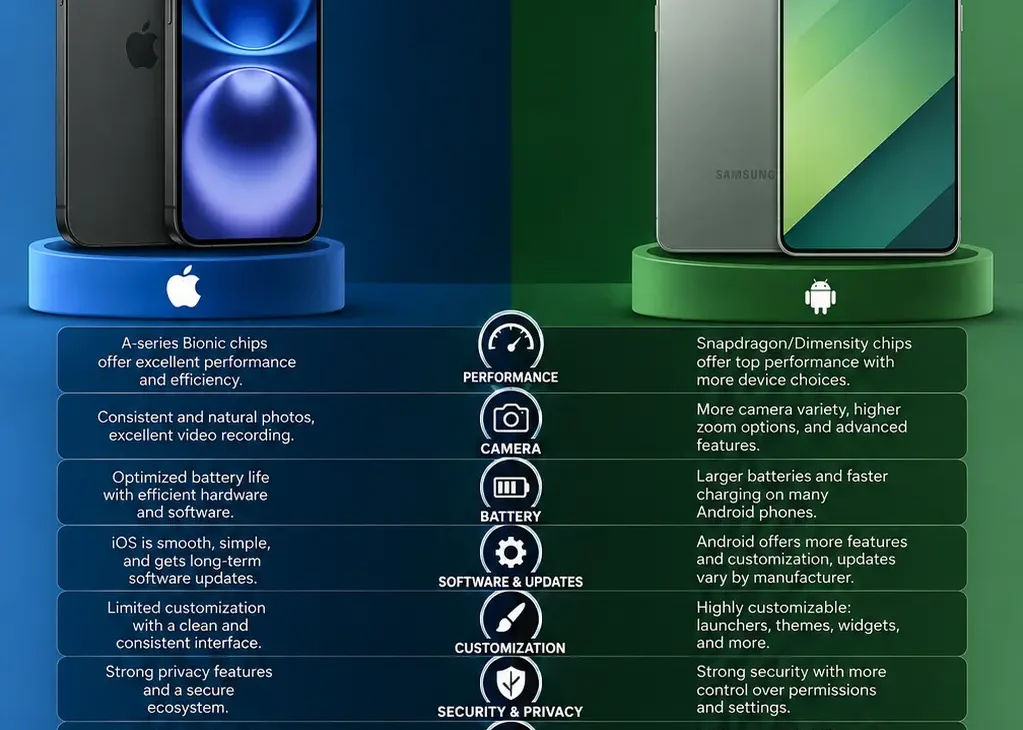
| Feature | iPhone | Android |
|---|---|---|
| Performance | Excellent | Excellent |
| Camera | Excellent | Excellent |
| Video | Excellent | Very good to excellent |
| Customization | Good | Excellent |
| Software updates | Excellent | Depends on manufacturer |
| Security | Excellent | Excellent |
| Phone variety | Limited | Excellent |
| Budget options | Limited | Excellent |
| Fast charging | Good | Often excellent |
| Foldable phones | Limited | Excellent |
| Ecosystem | Excellent | Excellent |
| Gaming | Excellent | Excellent |
| Ease of use | Excellent | Very good |
| Resale value | Usually strong | Varies |
iPhone vs Android for Students
Students can benefit from either platform.
An affordable Android phone can provide excellent value when the budget is limited.
Students who already use a MacBook or iPad may prefer an iPhone because of the integration between Apple devices.
Features such as file sharing, syncing, and continuity can make schoolwork more convenient.
iPhone vs Android for Professionals
Professionals should consider the devices they already use.
If your work revolves around a Mac, iPad, or Apple Watch, an iPhone can provide a smoother workflow.
Android can be more appealing if you use Windows or prefer Google’s services and a more customizable environment.
iPhone vs Android for Photography
For everyday photography, both platforms offer excellent choices.
If video recording is your biggest priority, many iPhones are particularly strong.
If you want powerful zoom, different camera configurations, or specialized photography features, Android flagships can offer impressive hardware.
The specific phone matters more than the platform.
iPhone vs Android for Battery Life
Battery life varies significantly between individual models.
Some Android phones use very large batteries and support extremely fast charging.
iPhones can also provide strong battery endurance through hardware and software optimization.
Instead of choosing based only on the operating system, compare the battery capacity, processor, display, and charging specifications of the phones you’re considering.
Final Verdict
The iPhone vs Android decision ultimately comes down to your priorities.
Choose iPhone if you want a polished and consistent experience, long-term software support, excellent video recording, and strong integration with Apple’s ecosystem.
Choose Android if you want more choice, greater customization, faster charging options, different form factors, or a wider range of prices.
For someone already invested in Apple’s ecosystem, switching to iPhone can be extremely convenient.
For someone who values flexibility and hardware variety, Android can be the better choice.
Frequently Asked Questions
Is iPhone better than Android?
Neither is universally better. iPhone is often preferred for its consistent software, long-term updates, video quality, and Apple ecosystem. Android offers more customization, device choices, and price options.
Which is more secure, iPhone or Android?
Both platforms offer strong security features. iPhone benefits from Apple’s tightly controlled ecosystem, while modern Android devices also provide advanced security and privacy protections.
Which has better camera quality?
Both can produce excellent photos. iPhone is particularly strong for consistent photography and video, while some Android flagships offer more advanced zoom and camera hardware.
Which has better battery life?
Battery life depends on the individual phone rather than the operating system. Some Android phones have larger batteries and faster charging, while iPhones can provide strong endurance through hardware and software optimization.
Which is better for gaming?
Both platforms are capable of excellent gaming performance. High-end iPhones offer powerful processors, while Android provides specialized gaming phones with features such as high-refresh-rate displays and advanced cooling.
Is Android more customizable than iPhone?
Yes. Android generally provides more customization options, including launchers, default applications, widgets, and interface changes.
Which phone lasts longer?
Both can last for several years when properly maintained. Software support, battery health, hardware quality, and how the phone is used all affect its lifespan.
Is iPhone more expensive than Android?
It depends on the model. Android includes both affordable and premium phones, while Apple’s iPhone lineup is primarily positioned toward the mid-range and premium segments.
Which is better for students?
Both can work well. Android may offer better choices for limited budgets, while iPhone can be particularly convenient for students already using a Mac or iPad.
Should I switch from Android to iPhone?
If you want Apple’s ecosystem, simpler software experience, strong video recording, and long-term support, switching may be worthwhile. If you value customization and hardware variety, staying with Android may make more sense.
Final Takeaway
The iPhone vs Android debate doesn’t have one universal winner.
iPhone is a strong choice for users who want simplicity, reliable performance, long-term software support, excellent video capabilities, and seamless integration with other Apple devices.
Android is better suited to users who want more freedom, customization, hardware choices, faster charging options, and phones across a wider range of prices.
The best choice is ultimately the phone that matches your budget and the features you actually use every day.