
Introduction
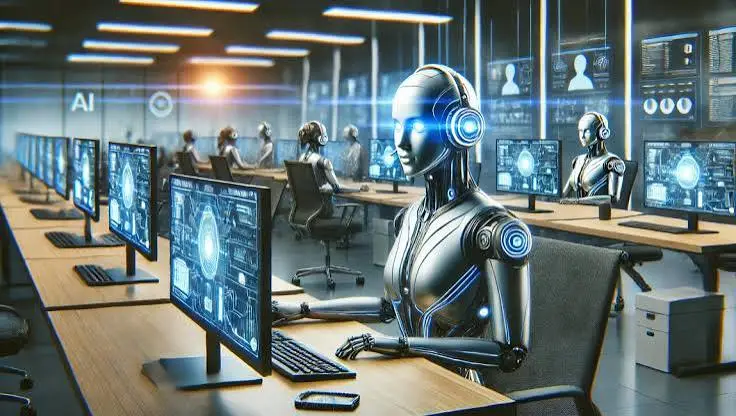
AI tech support has quickly become one of the biggest innovations in customer service and IT management. Businesses of all sizes are using artificial intelligence to answer customer questions, solve technical problems, and provide faster support without relying entirely on human agents. From chatbots to intelligent virtual assistants, AI has changed the way companies interact with customers and employees.
Not long ago, contacting technical support often meant waiting on hold for several minutes or even hours before speaking with an agent. Today, AI-powered systems can respond within seconds, identify common issues, and guide users toward practical solutions. This doesn’t just save time—it also creates a smoother experience for customers who want immediate answers.
As AI technology continues to improve, tech support is becoming smarter, faster, and more personalized. In this article, we’ll explore what AI tech support is, how it works, its advantages, limitations, and why it’s becoming an essential tool for modern businesses.
What Is AI Tech Support?
AI tech support refers to the use of artificial intelligence technologies to provide technical assistance, troubleshoot problems, and answer customer questions automatically or with minimal human involvement. Instead of depending solely on support representatives, AI systems use machine learning, natural language processing (NLP), and automation to understand user requests and provide relevant solutions.
Unlike traditional automated phone menus that simply direct calls, modern AI systems can understand natural language. This means users can type or speak their problems just as they would explain them to another person. The AI analyzes the request, searches its knowledge base, and offers an appropriate solution.
Many businesses now combine AI with human support teams. AI handles repetitive tasks like password resets, software installation guidance, account recovery, and frequently asked questions, while human agents focus on more complicated technical issues that require deeper analysis or empathy.
How AI Tech Support Works
AI tech support operates through a combination of advanced technologies that work together to understand and resolve customer issues. The process begins when a customer submits a question through live chat, email, voice assistant, or support portal.
The AI first uses Natural Language Processing (NLP) to interpret the user’s message. Instead of looking only for keywords, it tries to understand the meaning behind the request. This allows it to recognize different ways people describe the same problem.
After understanding the issue, the AI searches a knowledge base containing manuals, troubleshooting guides, previous support cases, and product documentation. Machine learning algorithms rank possible solutions based on similar past interactions. The system then provides step-by-step instructions or performs automated actions when possible. If the problem remains unresolved, it transfers the conversation to a human technician along with the conversation history, reducing the need for customers to repeat themselves.
Major Benefits of AI Tech Support
One of the biggest advantages of AI tech support is speed. Customers no longer need to wait in long queues for simple questions. AI can instantly provide answers at any time of day, making support available 24/7.
Cost savings are another major benefit. Businesses spend significant resources on hiring, training, and managing support staff. AI reduces the workload by handling thousands of routine requests simultaneously. Human agents become available for more complex situations where critical thinking is required.
Consistency also improves dramatically. Human agents may accidentally provide different answers to the same question, especially across multiple shifts. AI delivers standardized responses based on verified company information, helping maintain service quality while reducing errors.
AI Chatbots vs Human Support
AI chatbots have become the most visible form of AI tech support. They excel at answering frequently asked questions, processing simple requests, and guiding users through basic troubleshooting steps. Their biggest strength is speed and availability.
Human support agents, however, remain essential for situations involving complex technical failures, emotional customer interactions, or unusual circumstances that fall outside predefined knowledge. People are still better at understanding frustration, negotiating solutions, and thinking creatively.
The most effective customer service strategy combines both approaches. AI handles repetitive work while human experts resolve advanced issues. This hybrid model improves efficiency without sacrificing customer satisfaction.
Common Features of Modern AI Tech Support
Modern AI support platforms offer much more than simple question-and-answer systems. Intelligent chatbots can identify customer accounts, verify identities, and personalize responses based on previous interactions.
Many AI systems include predictive troubleshooting. Instead of waiting for customers to report issues, they monitor systems and detect unusual behavior before problems become serious. This proactive approach reduces downtime and improves reliability.
Voice assistants have also become increasingly capable. Users can describe technical problems verbally, and AI can guide them through solutions using natural conversation. Some platforms even support multiple languages automatically, allowing businesses to assist global customers without maintaining separate support teams.
Industries Using AI Tech Support
The technology industry naturally adopted AI support early because software companies frequently receive repetitive technical questions. AI helps users install applications, recover accounts, reset passwords, and troubleshoot software problems within seconds.
Banks and financial institutions use AI assistants to answer account-related questions, explain transactions, provide security guidance, and assist customers outside regular business hours. Strict security measures ensure sensitive information remains protected during these interactions.
Healthcare organizations are also beginning to use AI support for appointment scheduling, patient guidance, insurance information, and administrative tasks. While AI doesn’t replace medical professionals, it significantly reduces the workload associated with routine inquiries.
E-commerce companies depend heavily on AI for order tracking, return requests, shipping updates, payment issues, and product recommendations. Customers receive immediate responses, leading to higher satisfaction and fewer abandoned purchases.
Challenges and Limitations of AI Tech Support
Despite its impressive capabilities, AI tech support isn’t perfect. One of its biggest limitations is understanding highly unusual or unique problems that don’t closely match existing knowledge. In these situations, human expertise remains essential.
Another challenge involves customer frustration. Some users prefer speaking directly with a person, especially when dealing with urgent or emotionally stressful situations. Poorly designed chatbots can create negative experiences if they repeatedly fail to understand customer requests.
Privacy and data security also require careful attention. AI systems process large amounts of customer information, making secure data storage and responsible AI practices critical. Businesses must follow privacy regulations and maintain customer trust through transparent policies.
Best Practices for Businesses Implementing AI Tech Support
Companies should begin by identifying repetitive support tasks that consume significant employee time. Automating these processes first typically produces the fastest return on investment while minimizing implementation risks.
Building a comprehensive knowledge base is equally important. AI systems are only as effective as the information they access. Regular updates ensure customers receive accurate guidance as products, services, and policies evolve.
Businesses should also make it easy for users to contact human agents whenever necessary. AI should enhance customer service rather than create barriers between customers and support teams. Offering a seamless transition from AI to human assistance leads to higher satisfaction rates.
Future of AI Tech Support
The future of AI tech support looks incredibly promising. Advances in large language models, conversational AI, and predictive analytics are making support systems more intelligent every year. Future AI assistants will better understand context, remember previous conversations, and offer increasingly personalized assistance.
Remote diagnostics are expected to become far more advanced. AI will automatically detect software issues, identify hardware failures, and recommend preventive maintenance before customers even notice a problem. This shift from reactive support to proactive maintenance could significantly reduce downtime.
As AI continues evolving, businesses will likely integrate support across multiple channels, including messaging apps, voice assistants, augmented reality devices, and wearable technology. Customers will receive consistent assistance regardless of how they choose to communicate.
Is AI Tech Support Right for Every Business?
Nearly every business that provides customer service can benefit from AI tech support, but implementation should match organizational needs. Small businesses may start with simple AI chatbots for frequently asked questions, while large enterprises often deploy sophisticated AI platforms integrated with customer relationship management (CRM) systems.
Success depends on balancing automation with human expertise. Companies that rely entirely on AI may struggle with customer satisfaction during complicated situations, while those that ignore AI risk falling behind competitors in speed and efficiency.
The ideal approach combines intelligent automation with experienced support professionals. This allows businesses to reduce costs, improve response times, and maintain high-quality customer experiences simultaneously.
Conclusion
AI tech support has fundamentally changed the way businesses deliver customer service and technical assistance. By combining artificial intelligence, machine learning, and natural language processing, companies can solve routine issues faster, reduce operational costs, and provide round-the-clock support for customers worldwide.
Although AI cannot completely replace skilled human technicians, it serves as a powerful tool that enhances productivity and improves the overall support experience. Businesses that successfully integrate AI with human expertise create support systems that are faster, smarter, and more reliable than ever before.
As technology continues to evolve, AI tech support will become even more capable of understanding complex problems, predicting technical issues, and delivering personalized assistance. Organizations that invest in these solutions today will be better prepared to meet the growing expectations of tomorrow’s customers while staying competitive in an increasingly digital world.