
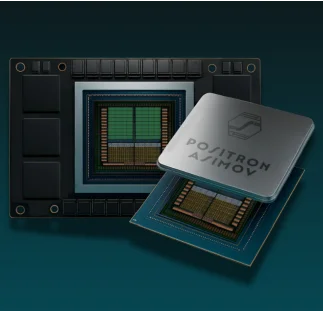
Positron has officially entered the big leagues. In an exclusive development shaking up the semiconductor and AI hardware space, Positron has raised $230 million in Series B funding as it prepares to challenge Nvidia’s dominance in AI chips.
The massive funding round highlights growing investor confidence in alternative AI computing architectures and signals intensifying competition in a market long controlled by Nvidia..
Positron Series B Funding Signals a Market Shift
The Positron Series B funding AI chips round places the company among the most well-capitalized AI hardware startups to date. As demand for artificial intelligence workloads continues to explode, investors are betting on new players capable of delivering performance, efficiency, and cost advantages over existing solutions.
With Nvidia GPUs powering much of today’s AI infrastructure, any serious challenger immediately draws industry attention — and Positron is clearly positioning itself as one.
Why Investors Are Backing Positron
Positron’s appeal lies in its focus on specialized AI inference and compute efficiency, rather than trying to replicate general-purpose GPUs. According to industry insiders, the company’s chip architecture is designed to:
- Deliver faster AI inference at lower power consumption
- Reduce operational costs for large-scale AI deployments
- Offer an alternative to Nvidia’s tightly controlled ecosystem
These advantages help explain why the Positron Series B funding AI chips round reached such a substantial figure.
The Growing Pressure on Nvidia’s AI Dominance
Nvidia currently dominates the AI chip market, particularly in data centers and high-performance computing. However, skyrocketing demand has also brought challenges:
- Supply constraints
- High costs for customers
- Heavy reliance on a single vendor
This has created an opening for startups like Positron, which aim to provide competitive solutions without requiring full dependency on Nvidia hardware.
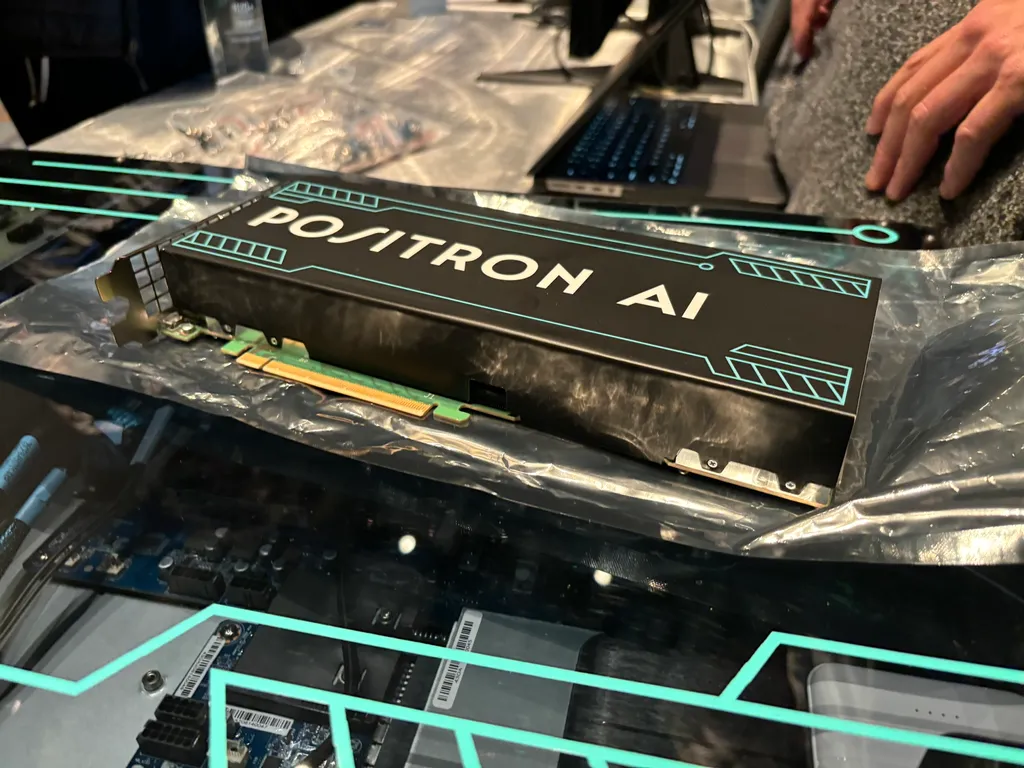
How Positron Plans to Use the $230M Funding
The fresh capital from the Positron Series B funding AI chips round is expected to accelerate:
- Chip development and tape-out
- Manufacturing partnerships
- Software tooling and compiler ecosystems
- Customer pilots and enterprise adoption
Scaling production and proving real-world performance will be critical as Positron moves from development to deployment.
A Competitive AI Hardware Landscape Is Emerging
Positron is not alone in the race. The AI chip market is seeing increased activity from startups and established players alike, all trying to carve out space alongside — or against — Nvidia.
What sets Positron apart is its focused strategy and timing. As AI workloads become more specialized, demand for custom hardware solutions is increasing, especially for inference-heavy applications.
What This Means for AI Developers and Enterprises
For AI developers and infrastructure teams, competition in the chip market is good news. More options mean:
- Lower costs
- Better performance-per-watt
- Reduced vendor lock-in
If Positron delivers on its promises, the Positron Series B funding AI chips announcement could mark the beginning of a more balanced AI hardware ecosystem.
Industry Reaction and Market Expectations
The funding news has already sparked conversation across the AI and semiconductor industries. Analysts see Positron’s raise as a sign that investors are actively searching for alternatives to Nvidia — not just complementary technologies, but real competitors.
Still, execution will matter more than capital. Competing with Nvidia requires not only strong hardware, but also robust software support and developer adoption.
Final Thoughts
Positron’s $230 million Series B funding round represents more than just another startup milestone — it’s a clear signal that the AI chip market is entering a new phase of competition. As demand for AI computing continues to rise, companies like Positron are positioning themselves to challenge the status quo.
Whether Positron can truly take on Nvidia remains to be seen, but one thing is clear: the race for the future of AI hardware is heating up fast.